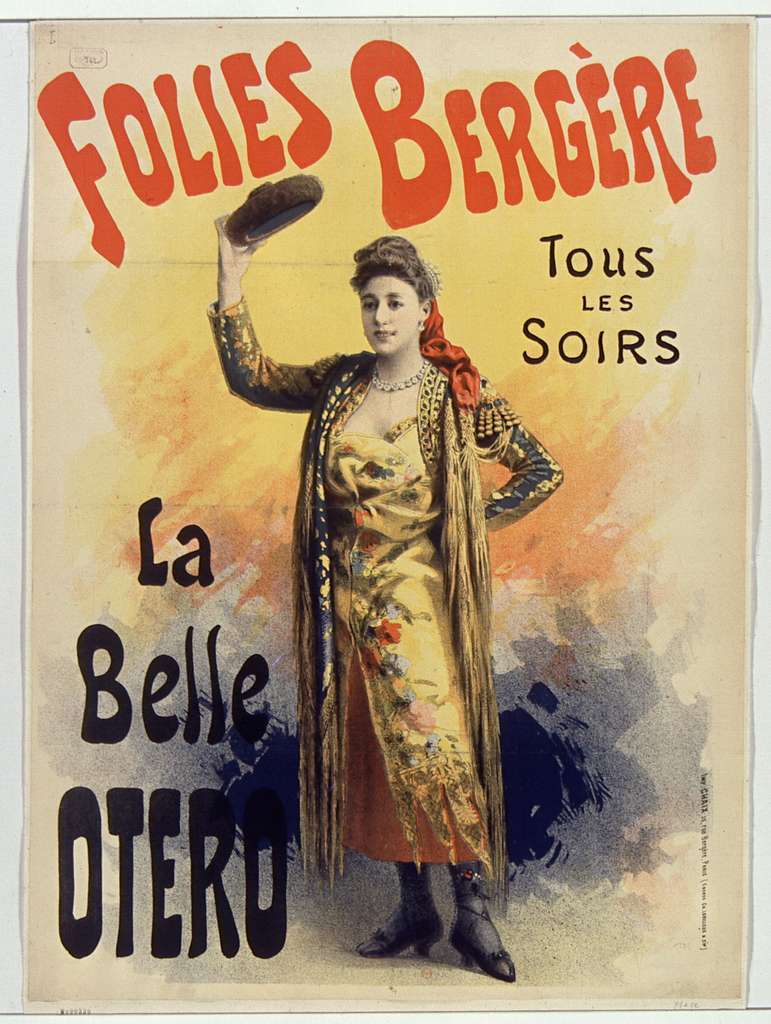
Of course, most of these demi-mondaines, given the narrow circle of power in which they all moved, knew each other very well. Many were friends, and others, like La Belle Otero and Liane de Pougy, enemies (at least on paper). Their conquests, romances, and scandals made hearts beat, but not as strong as when they faced each other out of jealousy or a clash of interests. The anecdotes about it are not to lose detail.
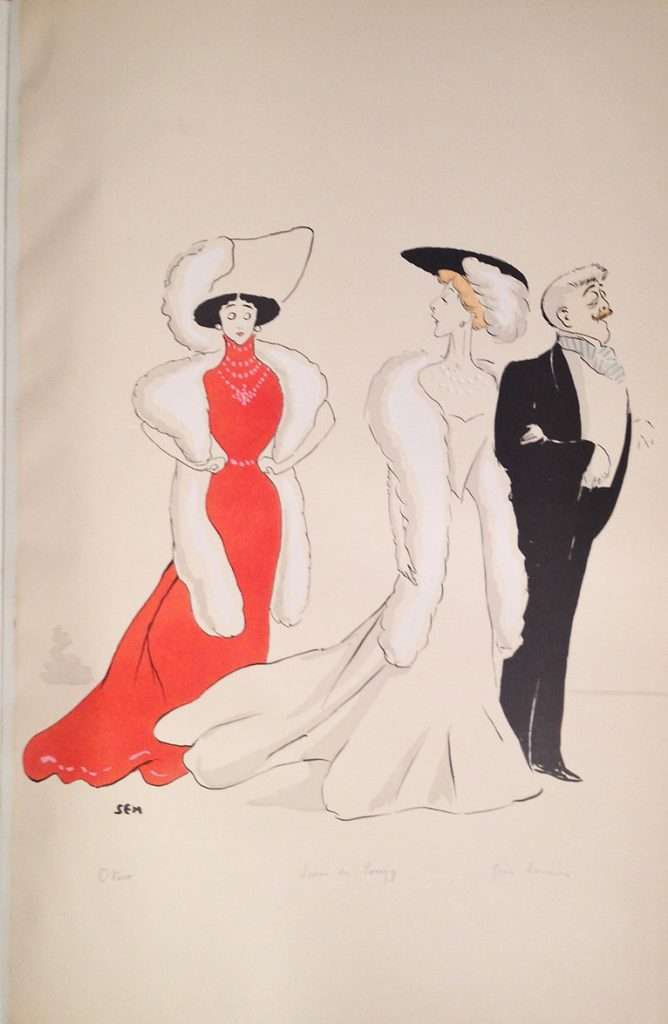
Album Montercarlo, Serie 1
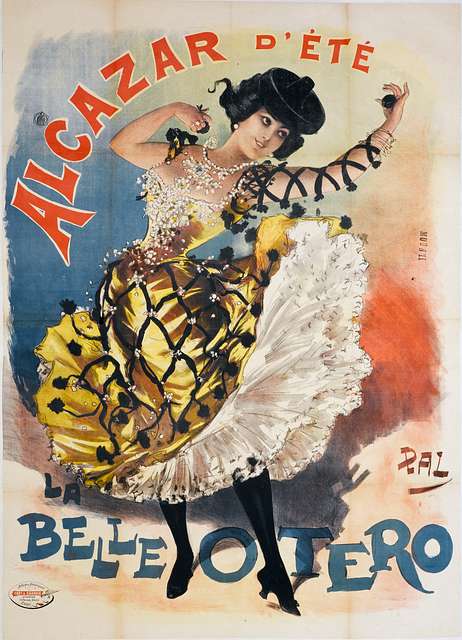
Personal jealousy and, above all, interpretive rivalries constituted a real feast for the press of the time. There was everything from naïve copies like Valentine Petit to Loïe Fuller’s serpentine dance, to authentic parodies like Dalton’s of the unrestrained flamenco-exotic dance of La Belle Otero. These last two came to “fight a sword duel” to settle their differences.
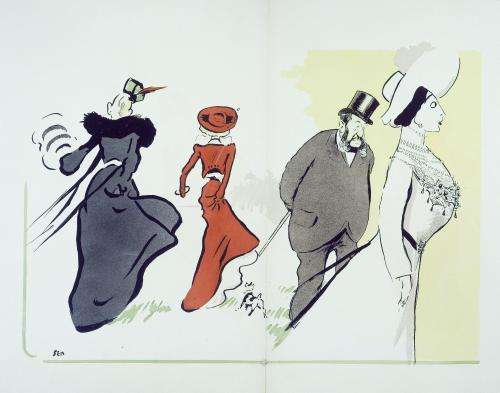
Marthe Helly, Liane de Lancy, Gousticaire et Caroline Otero. Lithographie en couleur. Paris, Musée Carnavalet 1905.
Friendship and love: the difficult coexistence in a world of divas
For example, Liane de Pougy is known to have had several run-ins and an outright feud with both La Belle Otero and Colette. With the former, one night she starred in a particular staging. Wanting to annoy her, La Belle Otero showed up in a diamond-studded bolero, but Liane de Pougy, forewarned, left her cleavage, shoulders, and arms completely bare, making her maid come after her displaying all her jewelry.
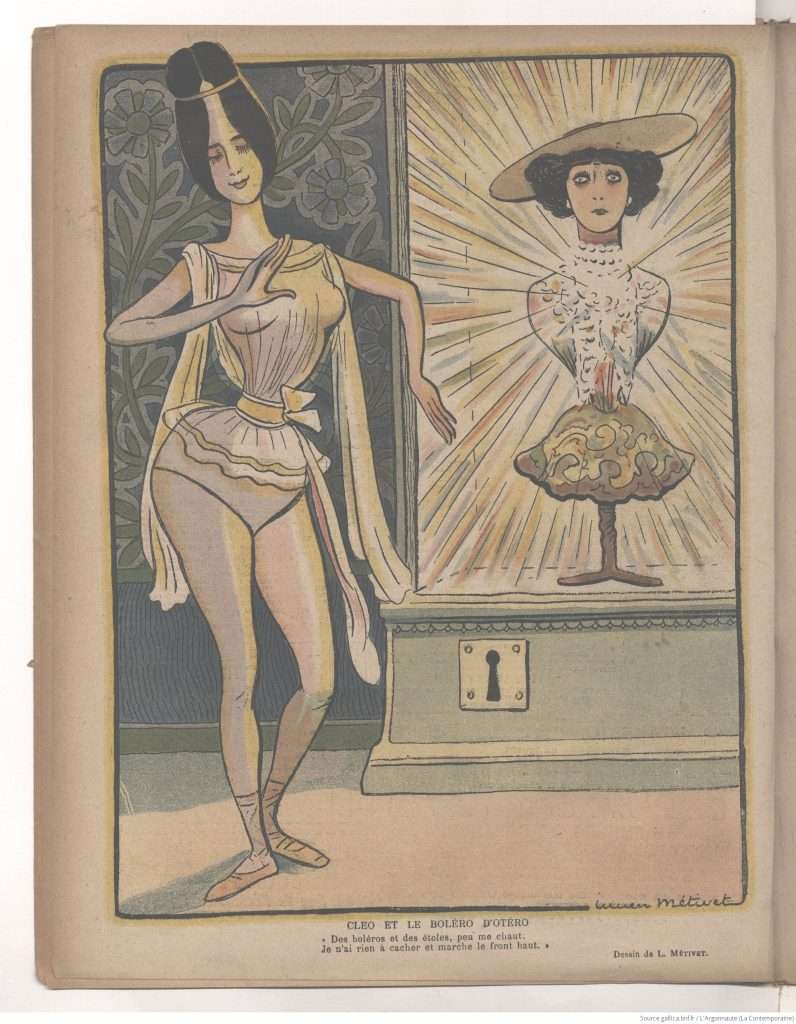
The message was clear: she herself was the main jewel, although she had many. Later La Belle Otero would commission Cartier to make several pieces from the diamonds of that garment, which ended up pawned at the Monte Carlo Casino for their gambling debts.
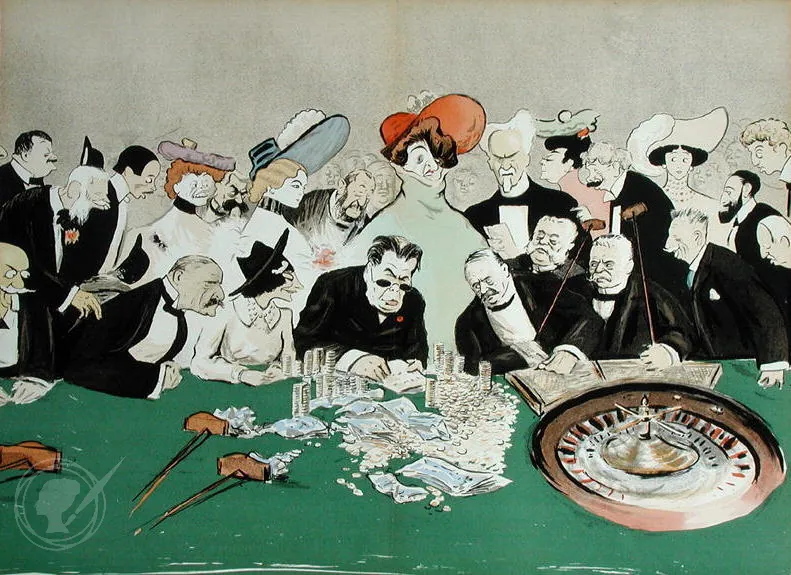
1910, Georges Goursat (Sem).
Album Montercarlo, Serie 2.
Liane de Vriès & La Belle Otero
It is also known about the collaboration and close friendship (at least in its beginnings) between the Belle Epoque Muses Liane de Vriès and La Belle Otero, who in 1885 would have shared the stage in a café-theater in Marseille, from where they would have moved together (or at least to the same time) to Paris. Later, Liane De Vriès would be romantically involved with another demi-mondaine also known to the general public, Suzane Derval.
La Belle Otero & Carmencita
For her part, La Belle Otero would have been a close friend of Carmencita, another Spanish woman (Andalusian) with whom she may have coincided from her beginnings in Lisbon, her arrival in Paris (1889), and on her tours in the United States. In addition, both would have been pioneers in appearing in the first movies that were recorded.
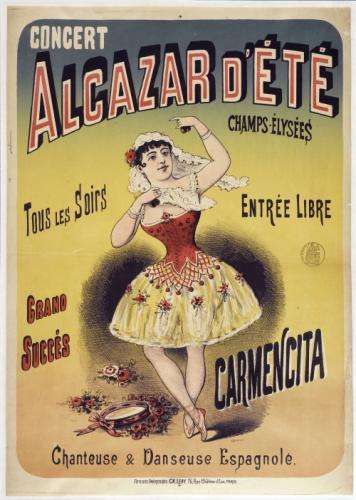
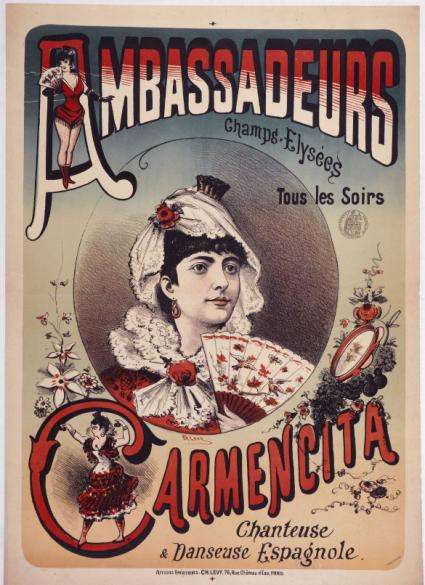
Carmencita was a Spanish dancer (born Carmen Dauset Moreno in 1868 in Almería and died in 1910). She was well known in the music hall and café-concert scene in the late 19th and early 20th centuries. She and Carolina Otero were the same age.
Carmencita also achieved notoriety in film history for her appearance in the 1894 film directed by William Kennedy Laurie Dickson, portraying Thomas Edison: Carmencita. This is another point in common with La Belle Otero, as one of the earliest surviving 19th-century films (1898) filmed one of her flamenco dance performances. She was portrayed by John Singer Sargent, William Merrit Chase, and James Beckworth, among others.
Liane de Pougy & Sarah Bernhard
Liane de Pougy had an excellent relationship with the great theater diva Sarah Bernhard, who came to share a lot of advice with her, also recommending that she directs her performances toward other points of interest, such as her cabaret costumes and stage presence beyond pure acting.
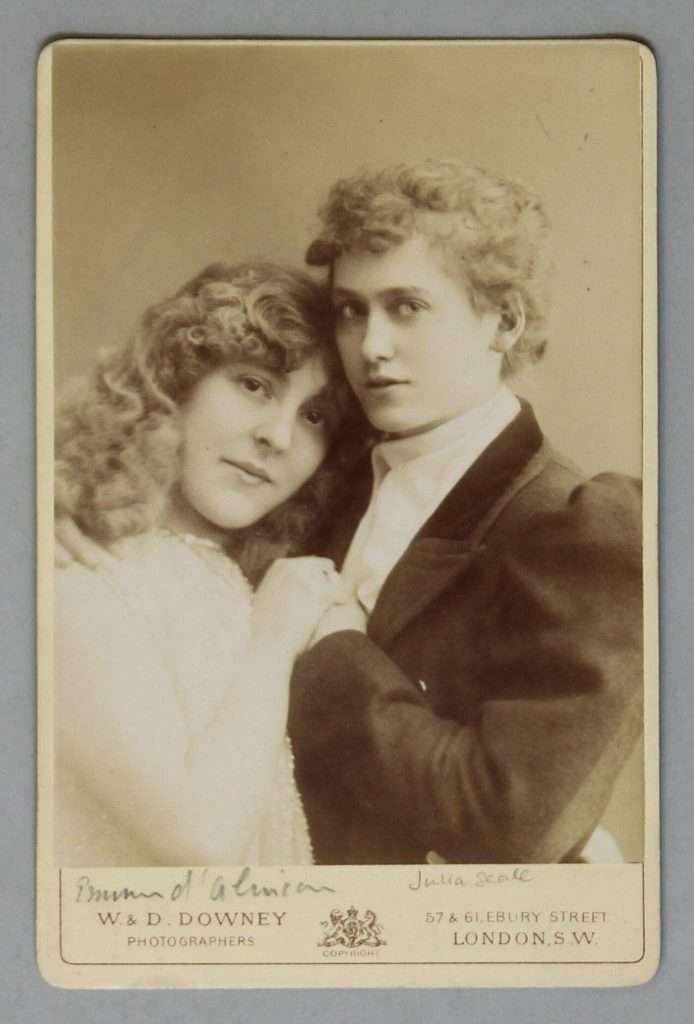
Les reines d’amour: from Love to Ate
With Émilienne D’Alençon, Liane de Pougy went from love to hate at various times, as Gil de Blas recounted in November 1898 (Samedi Novembre 12, 1898, number 6935, p.1):
« Les deux reines d’amour, Liane, aux yeux de songe, Émilienne, aux boucles de soleil, s’étaient quelque temps boudées. Mais sur d’aussi charmantes lèvres la bouderie ne saurait s’éterniser, et l’on annonce officiellement la réconciliation des deux ennemies. On dit aussi que d’ici quelques mois nous aurons la joie exquise de les voir toutes deux dans une grande pantomime, sur la scène d’un de nos principaux music-halls. Emilienne et Liane jouant ensemble ! Quel duo incomparable que celui qui réunira la grâce mélancolique et hautaine du merveilleux iris noir à la splendeur ingénue de la blonde beauté en qui revivent les douces châtelaines disparues avec les neiges d’antan ! Paris est vraiment la ville des miracles, puisqu’il nous montrera celui-ci. »
Two of the most famous demi-mondaines have no qualms about using scandal — which they stir up themselves — to promote their upcoming premiere. The press plays along. It presents their “pantomime”, both on stage and in the street, as a masculine dream come true. A fantasy to suit all tastes: a blonde and a brunette who fight and make up like very close friends…
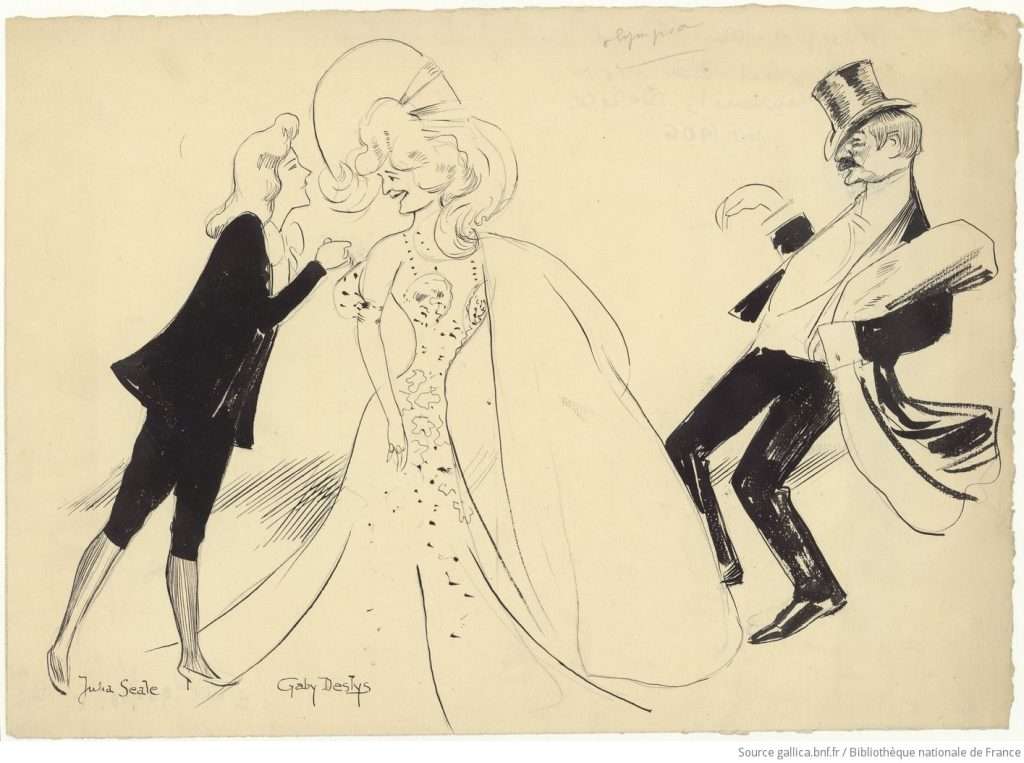
The ups and downs of the relationship between Liane de Pougy and Émilienne D’Alençon can be considered the culmination of a masterclass. Émilienne D’Alençon exploited her private life like no other to create scandal and attract viewers with an added bonus. Among her many close friendships and romantic relationships, Émilienne D’Alençon was associated with La Goulue, but also with Renée Vivien (poems survive), the great Valtesse de la Bigne, and the English actress and mime Julia Seale, with whom she also shared the stage.
Incidentally, Julia Seale was also one of the pioneers of cinema. She appeared in Robert Paul’s 1896 film, The Soldiers’ Courtship, alongside Fred Storey.