The Italian ballerina Aïda Boni (1880–1974) was one of the most graceful and versatile figures in European ballet at the turn of the 20th century. Trained at La Scala’s ballet school in Milan, she quickly established herself as a dancer of charm and refinement. By the late 1890s, Paris audiences were already captivated by her style: in L’Illustré Théâtral (12 June 1897) she was described as “a very young dancer with the charm ready to conquer the public.”
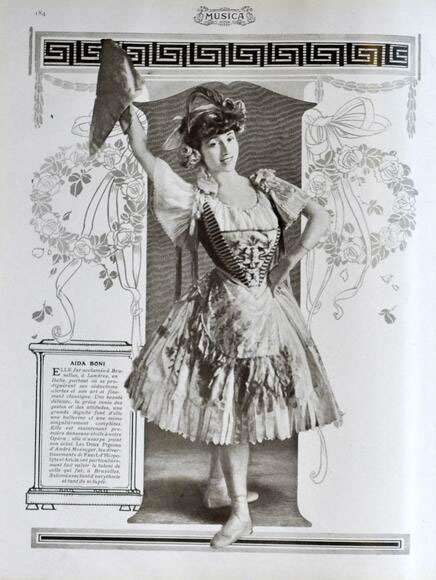
From Milan to Paris and Brussels
After early performances in Florence, Boni appeared in Paris during the 1898–1899 season, dancing at the Théâtre Marigny, the Casino de Paris, and the Opéra-Comique. In 1901, she joined the Théâtre de la Monnaie in Brussels, becoming principal dancer by 1903. There she created important new roles such as:
- La Captive (1902, Lucien Solvay)
- Lilia (1903, Joseph Jacob) – as Rosita
- Zanetta (1903, Gaetano Saracco)
- Maïmouna (1906, François Ambrosiny)
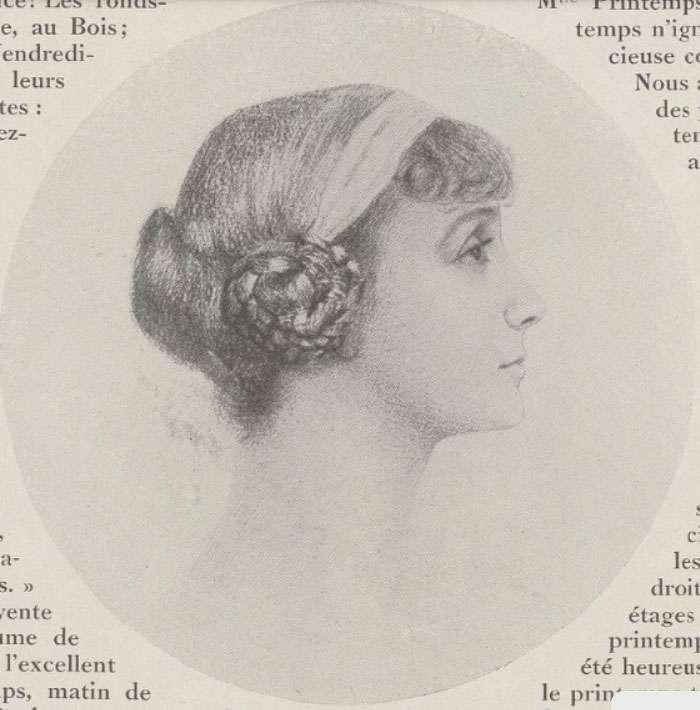
International Career and Paris Opéra Success
By 1907, Boni’s fame had spread across Europe. She performed in Armida at Covent Garden, London, and later returned to La Scala. Soon afterwards, she settled in Paris, becoming prima ballerina at the Paris Opera, where she danced alongside greats like Carlotta Zambelli, Jeanne Chasles, Rosita Mauri, Rita Sangally, and MA Aveline.
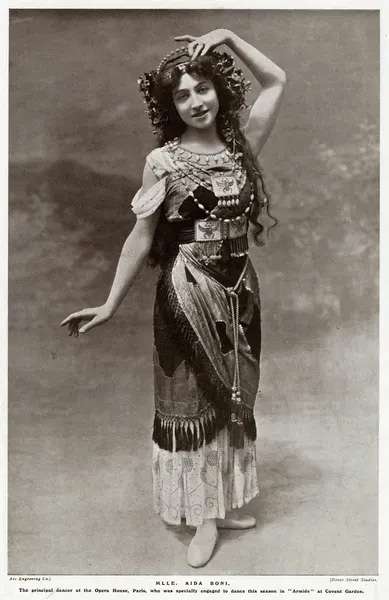
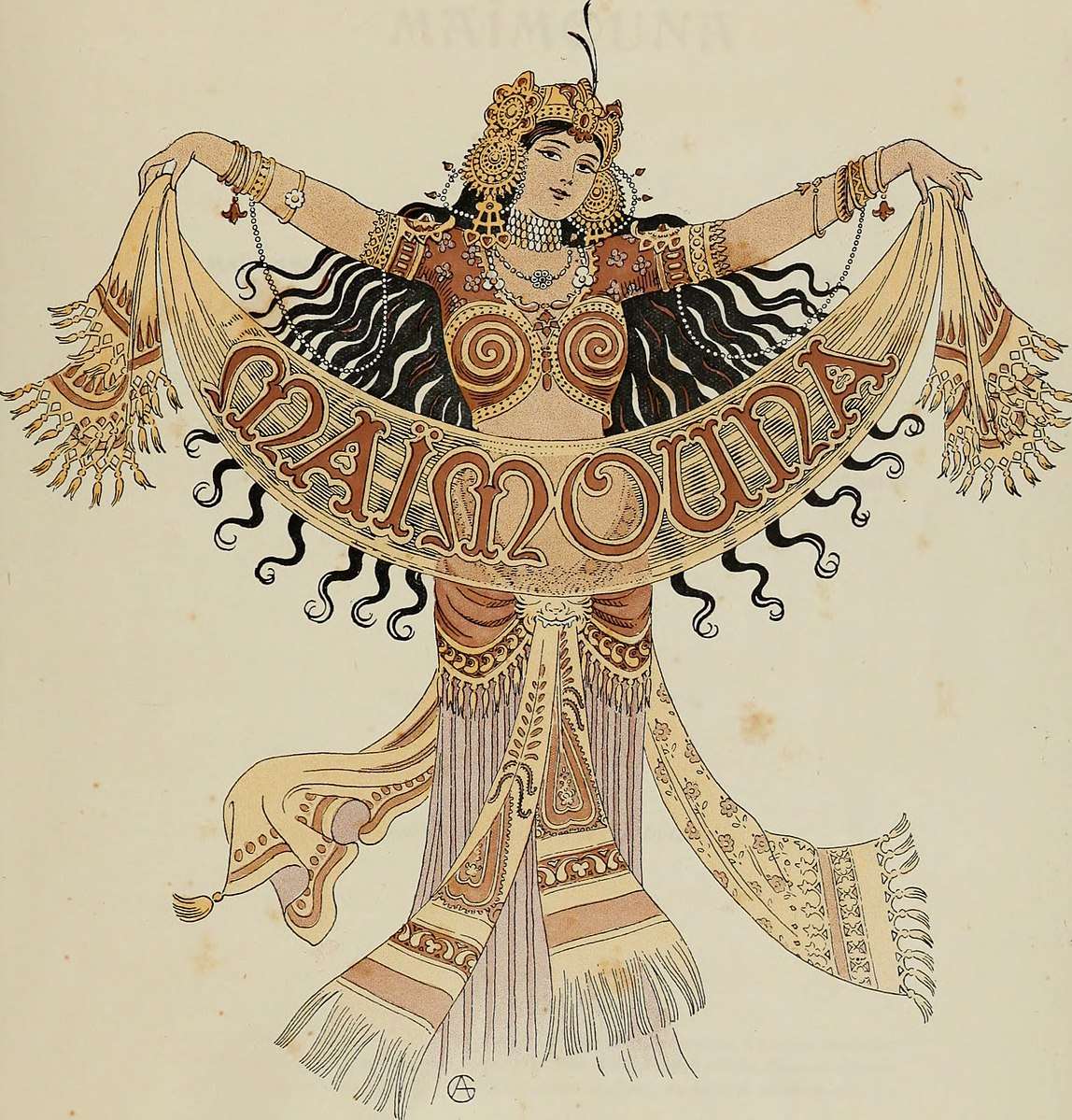
One of her most notable appearances came in 1917, in Adélaïde ou le Langage des fleurs, performed with MA Aveline to music by Maurice Ravel. That same year she was featured in French Vogue, posing across a full page in an elegant dance costume – proof of her popularity beyond the opera stage.
Tours and Exotic Roles
Boni was frequently invited abroad, with tours in St. Petersburg, Italy, and Spain, performing in some of the most prestigious opera houses of the period. Many of her roles portrayed “exotic” characters, not so much in choreography but in costuming and staging, reflecting the fashions of the Belle Époque.
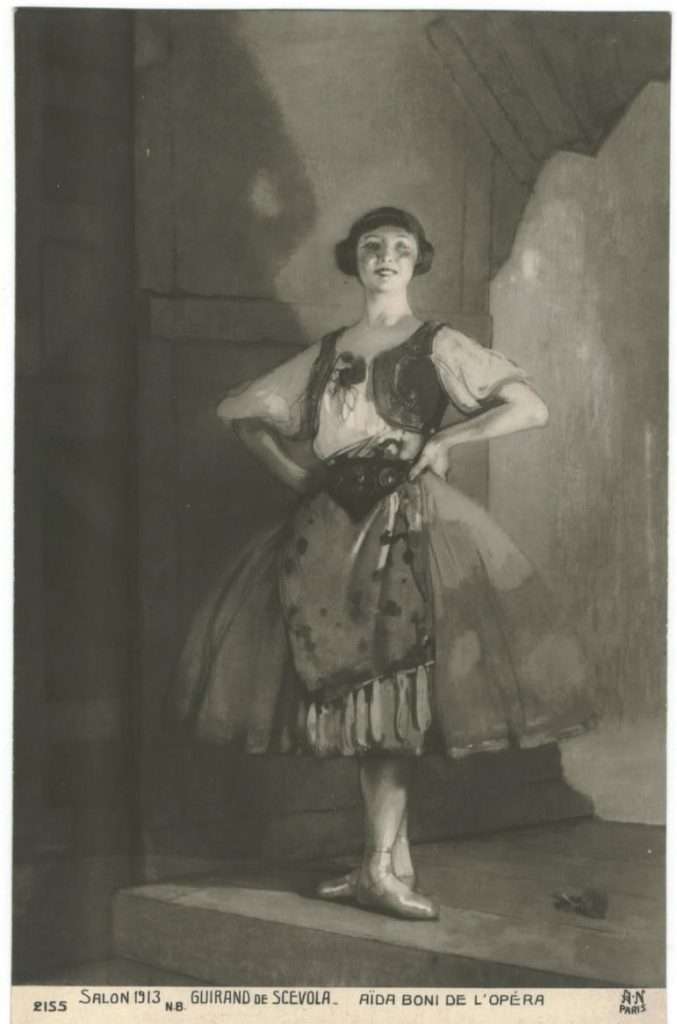
She retired in 1922, after more than two decades at the top, and lived quietly until her death in Milan in 1974.
A Muse for Postcards and Caricatures
Aïda Boni’s elegance made her a favourite subject for postcards, portraits, and press illustrations. Collectors today can still find stunning images of her:
- Illustrated portraits in French press archives: Bru Zane Mediabase – Aïda Boni
- Archival programmes at the BnF catalogue
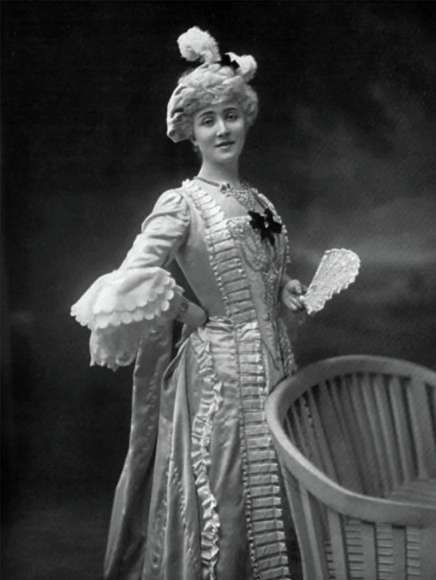
She remains the protagonist of some of the most beautiful antique ballet postcards, treasured today by collectors.
Timeline of Aïda Boni (1880–1974)
- 1880 (18 November) – Born in Milan, Italy.
- 1890s – Trained at La Scala Ballet School, Milan.
- 1898–1899 – Early Paris performances at Casino de Paris, Opéra-Comique, Théâtre Marigny.
- 1901 – Joined Théâtre de la Monnaie, Brussels.
- 1902 – Danced La Captive.
- 1903 – Named principal dancer; created Lilia and Zanetta.
- 1906 – Starred in Maïmouna.
- 1907 – Performed at Covent Garden and La Scala.
- 1907–1922 – Prima ballerina at the Paris Opera.
- 1917 – Appeared in Adélaïde ou le Langage des fleurs (Ravel); featured in Vogue.
- 1922 – Retired from the stage.
- 1974 – Died in Milan, aged 93.
Notable Roles and Ballet Premieres
- La Captive (1902, Brussels)
- Lilia (1903, Brussels) – Rosita
- Zanetta (1903, Brussels) – title role
- Maïmouna (1906, Brussels) – title role
- Various ballets and divertissements at the Paris Opéra (post-1907), often in productions of Thaïs, Faust, and Samson et Dalila.
Today, at HankiesHandkisses.com, we celebrate Aïda Boni not only as a leading ballerina of her time but also as an enduring icon of elegance. Through postcards, portraits, and press images, her subtlety, charm, and artistry remain alive for ballet lovers and collectors alike.