2 Antique French Embossed Violet Corsage Postcards – Gilt Floral Ephemera
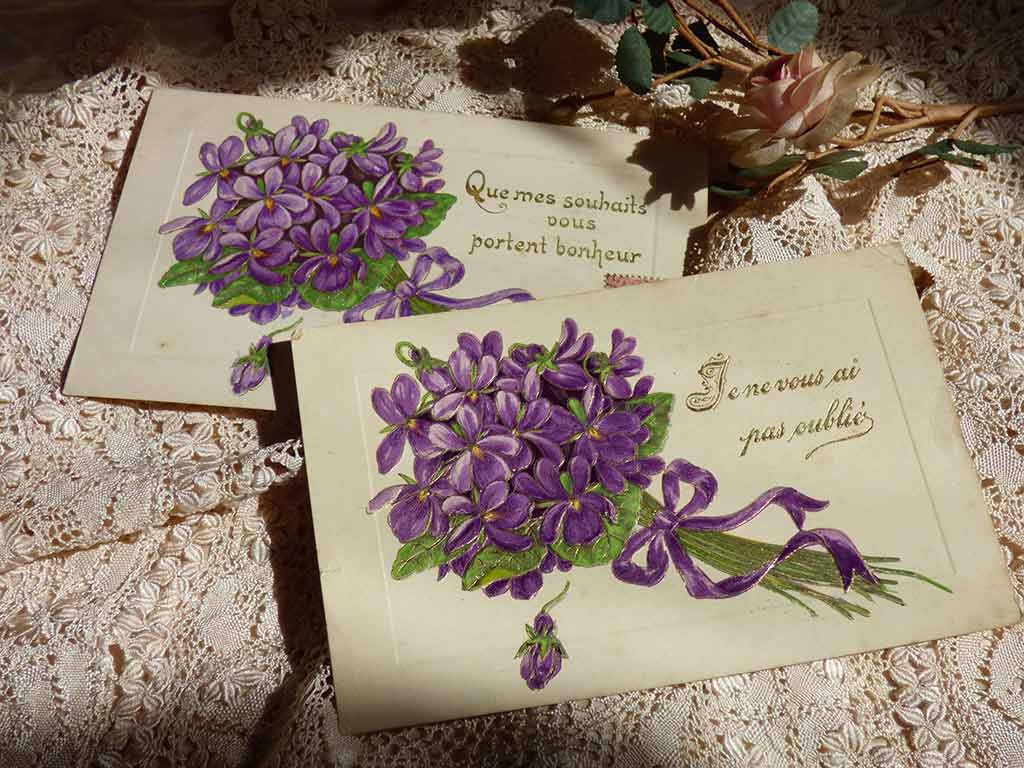
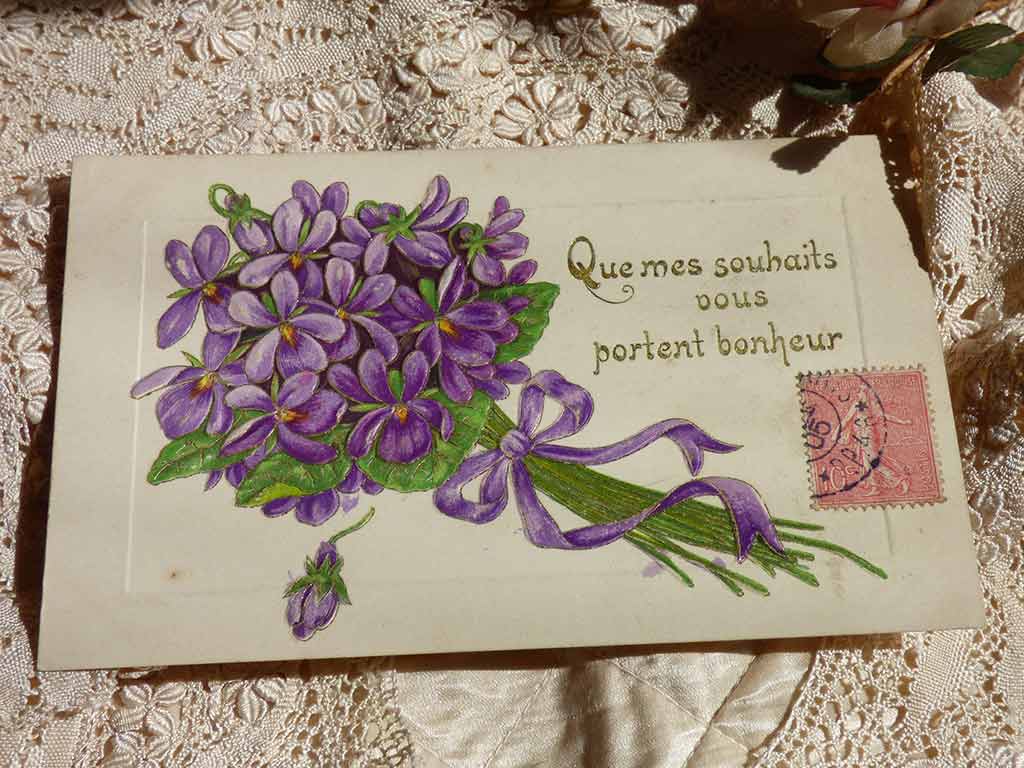
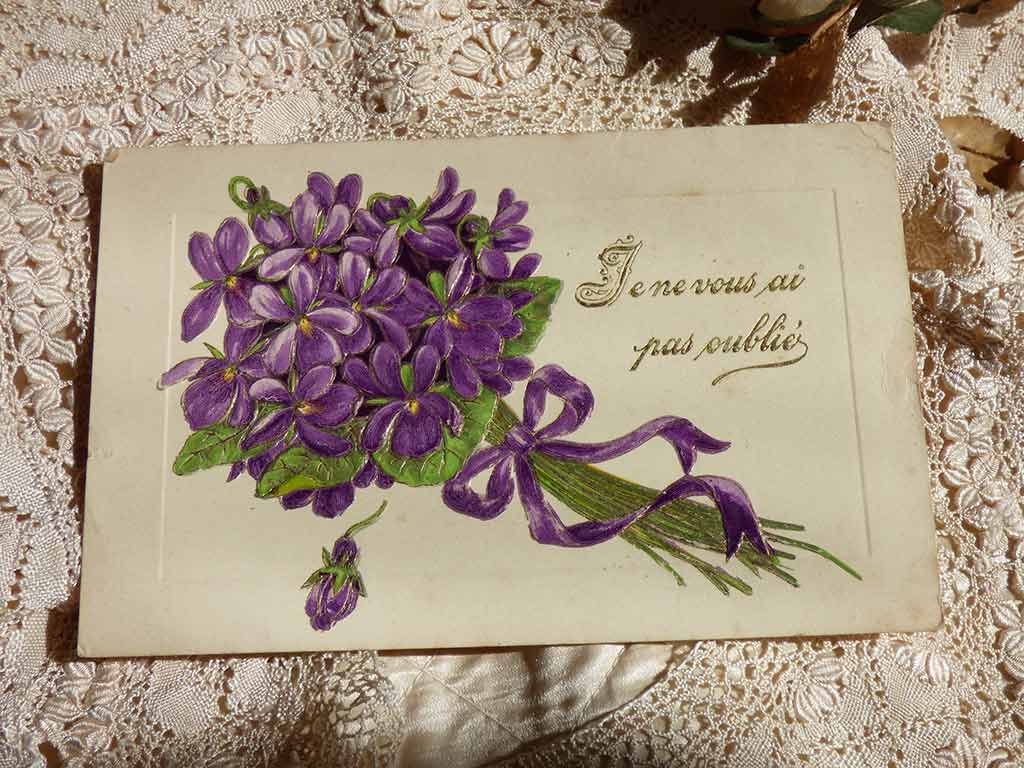
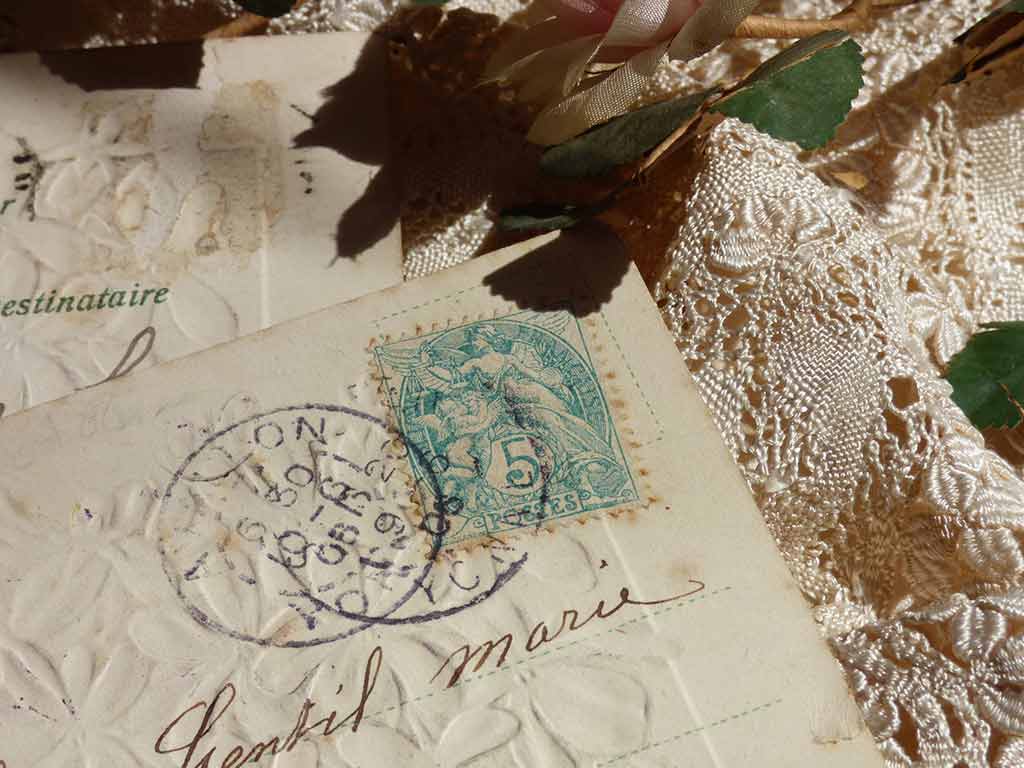
Two antique French embossed violet postcards with chromolithographic colour, raised floral corsages and gilt details. A decorative survival from the violet craze that spread through fashion, perfume, textiles and floral culture around 1900.
Description
Date: Early 20th century, c. 1900s
Provenance: France
Set: 2 original antique postcards
Materials: paper, chromolithographic printing, embossing and gilt details
Floral motif: violet corsages
Condition: Original antique condition with the expected signs of age. Please examine the photographs carefully.
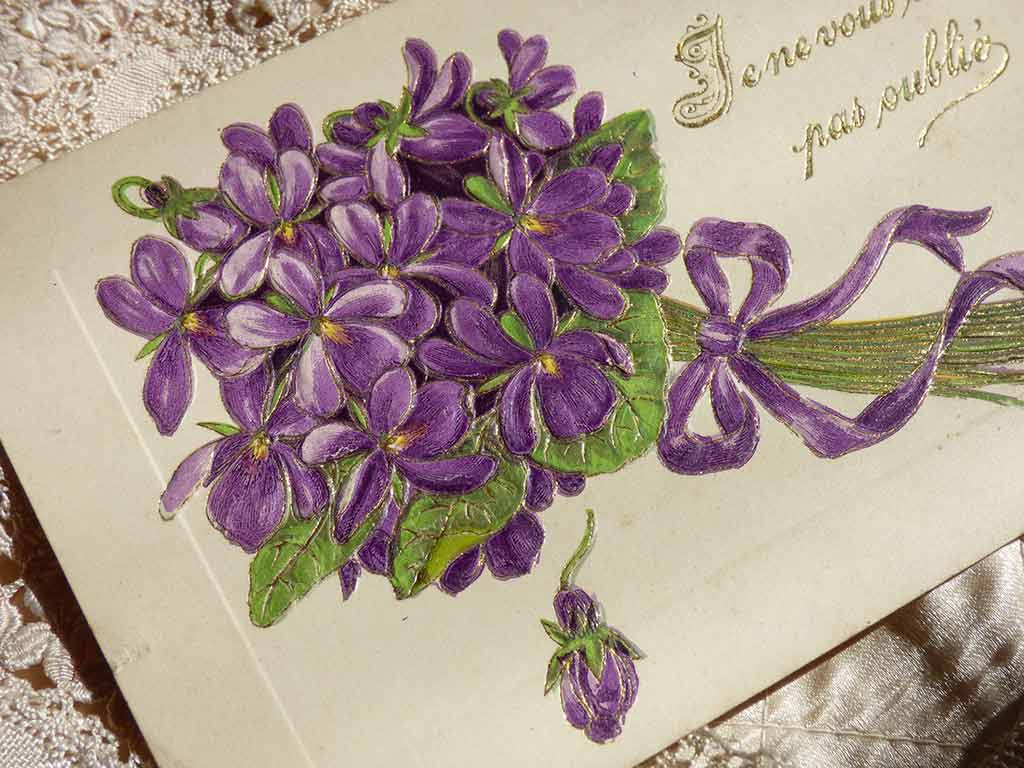
These two antique French violet postcards transform small floral corsages into richly decorative objects through colour printing, pronounced embossing and delicate gilt highlights.
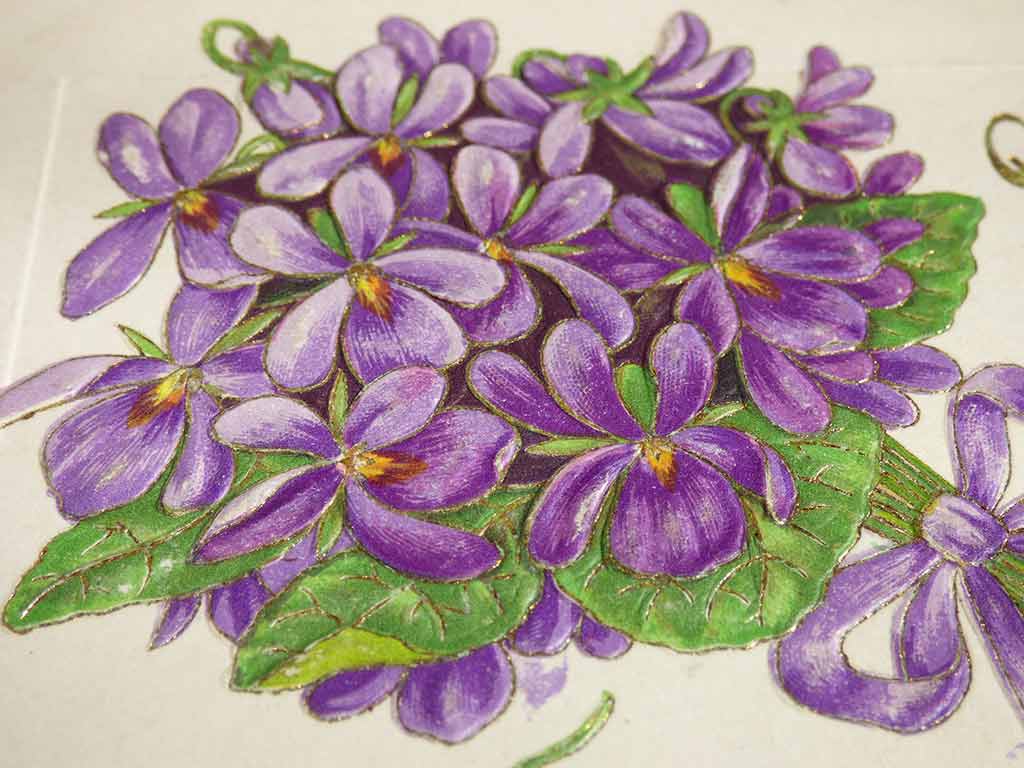
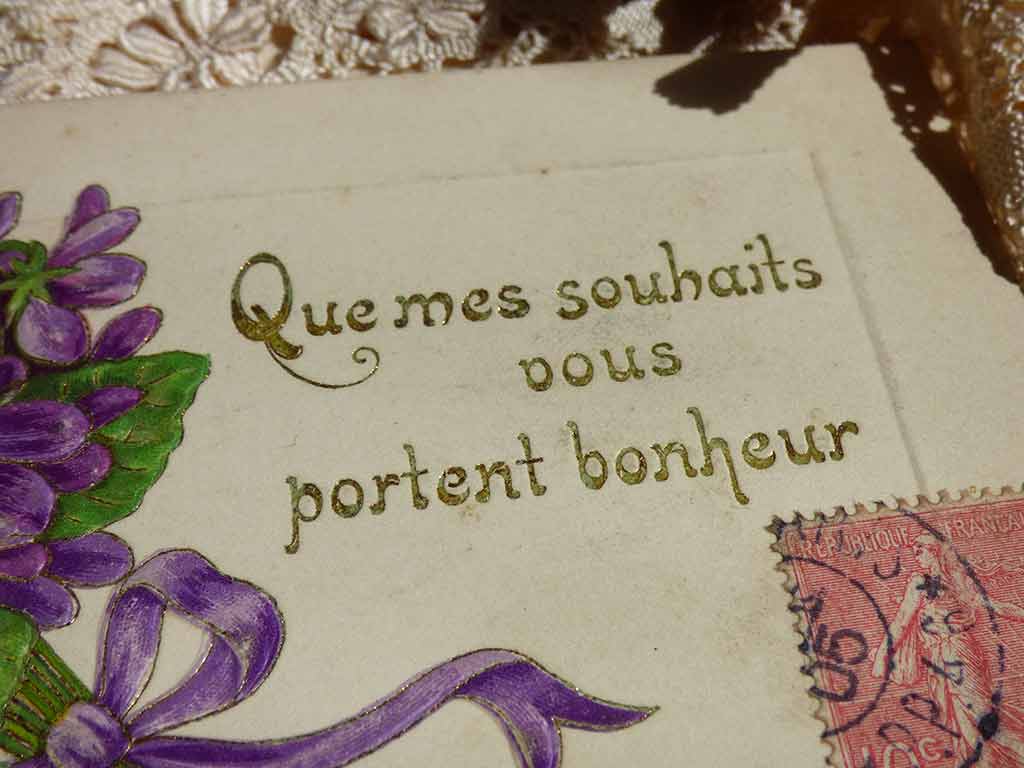
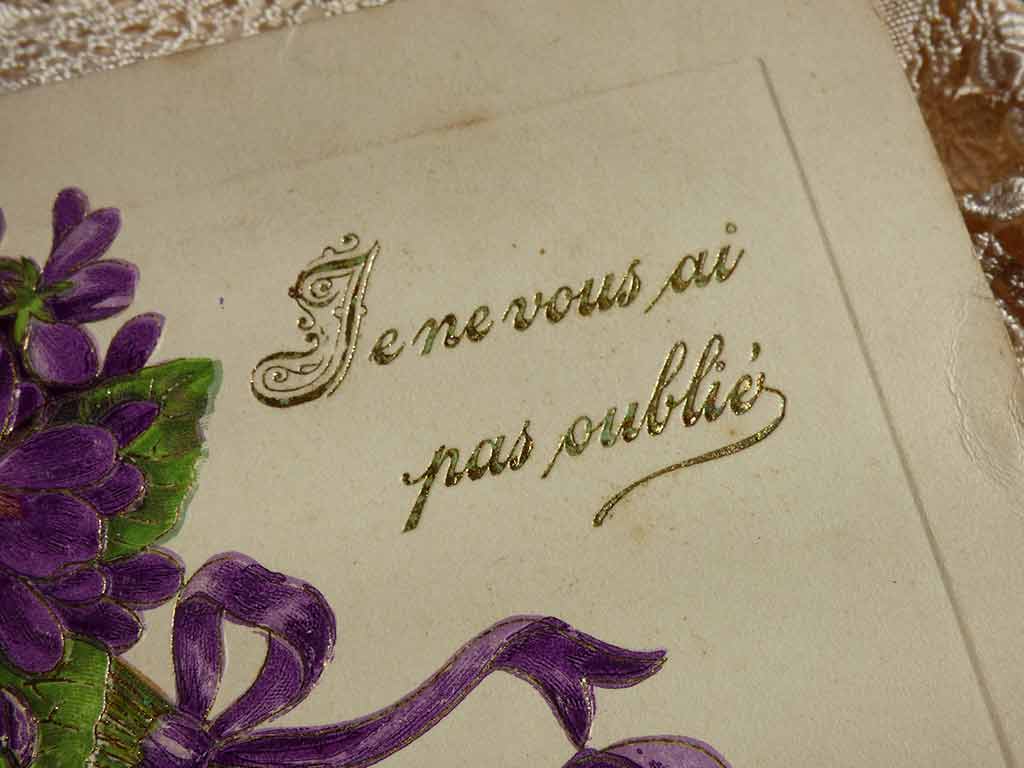
The purple blossoms and green foliage rise from the card surface, while touches of metallic gold catch the light and emphasise individual details.
More elaborate than a conventional printed flower card, they belong to a period when the violet had become one of the most fashionable floral motifs in European visual culture.
The Violet Craze around 1900
By the end of the 19th century, the popularity of violets extended far beyond the language of flowers.
The flower appeared in fashion, textiles, perfume, accessories, advertising and decorative art, creating a recognisable visual culture around its purple colour, compact blossoms and celebrated fragrance.
A striking example survives in Louis Rhead’s 1895 advertising lithograph for “Vio-Violet”, a Lundborg perfume, in which the flower itself becomes the identity of a commercial fragrance.
Fashion followed the same enthusiasm. The Victoria and Albert Museum preserves a Jeanne Paquin fashion design for Winter 1897 associated with this fashionable floral vocabulary, as well as dress fabric using violet ornament.
These surviving objects show how easily the violet moved between the natural flower and manufactured culture: a bouquet could become a perfume, a textile pattern, a fashion detail or an embossed postcard.
From Fresh Violet to Decorative Motif
The popularity of violet imagery was supported by an enormous trade in the actual flower.
By the 1880s, millions of bunches were being sold annually in Paris. Around Toulouse, commercial cultivation became particularly important during the late 19th and early 20th centuries.
The violet market eventually occupied the refectory of the Jacobins, and at the industry’s height more than 600 producers supplied flowers for customers across Europe and as far away as Russia.
The small bouquet shown on a postcard was therefore not an imaginary arrangement. It reproduced a familiar commodity that could be purchased, carried, worn, given away and enjoyed for its scent.
What printing offered was permanence.
Embossing, Gilding & the Permanent Corsage
These cards reproduce the volume of a real violet bunch through embossing.
Raised petals and foliage give the bouquet physical depth, while chromolithographic colour provides the characteristic purple and green palette. Finally, gilt touches introduce a luxury that no natural corsage could retain.
The result is almost a paper counterpart to a fashionable floral accessory: a permanent violet corsage designed to survive long after fresh flowers would have faded.
This intersection between commercial flower culture and decorative production makes the pair particularly interesting for collectors of antique postcards, chromolithography, floral design, historical fashion and floriography.
Original Early-20th-Century Ephemera
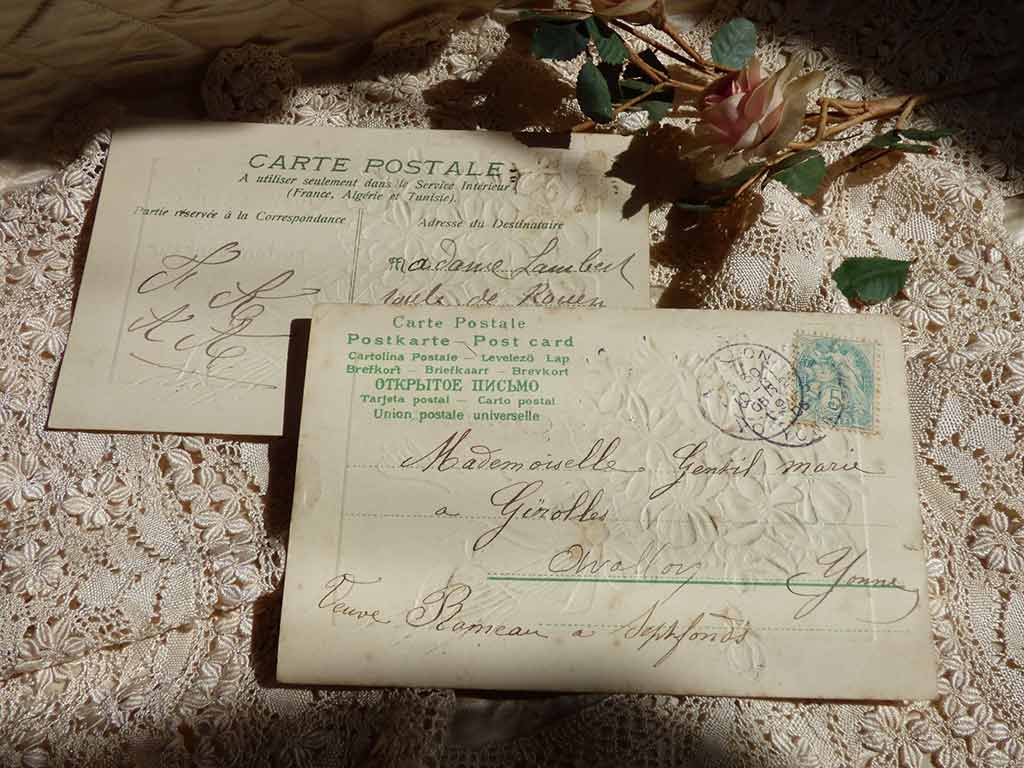
Both postcards are original period objects rather than reproductions.
Their raised surfaces and metallic decoration are best appreciated under changing light, which reveals the dimensional quality of the floral designs.
They can be preserved as examples of early-20th-century decorative ephemera or used in display, scrapbooking, collage and other creative projects involving authentic antique materials.
The listing is for the two original postcards shown. They are sold together as a pair.
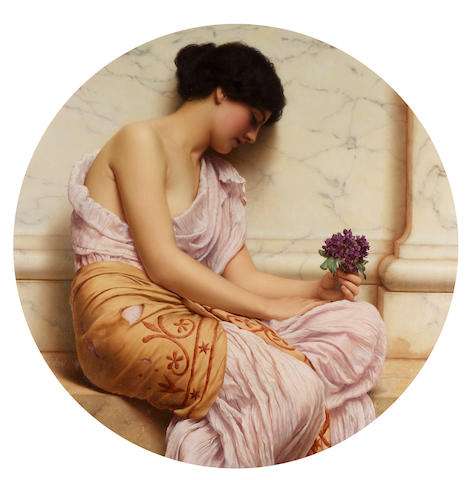
*** Last picture: John William Waterhouse, Violets, sweet violets (1906) Private collection
Related products
-


Antique postcards 1900s. Language of flowers. Forget-me-not and Mistletoe
18,00€ Add to cart -

1 Antique postcard 1900s. Cinema actress Zizi Papillon
21,00€ Add to cart -

Antique postcard 1900s. French artist Liane de Vriès in glitter costume
18,00€ Add to cart -

Antique postcards 1900s. Language of flowers. Wild rose, violet and lilac with clove
18,00€ Add to cart


