Explore genuine antique and vintage flower bouquets and corsages from the 19th and early 20th centuries, and treat yourself to an original period floral accessory, carefully selected for its craftsmanship, beauty and history.
Flowers Made to Last
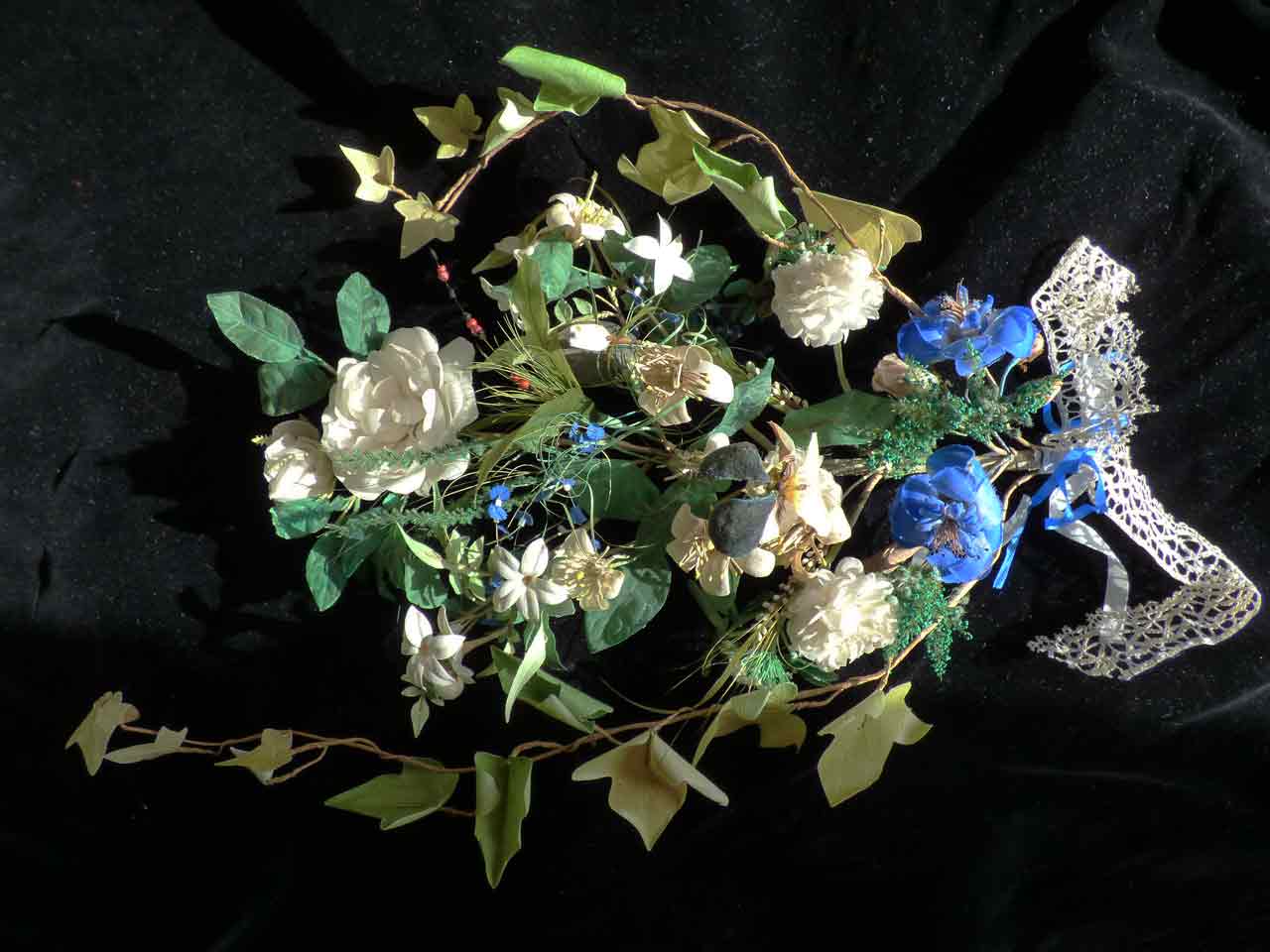
At HankiesHandkisses, you won’t find modern flower arrangements created in a vintage style, but original antique and vintage floral pieces, made decades — and in some cases more than a century — ago.
Long before artificial flowers became associated with modern decoration, flower-making was a highly developed branch of the fashion trades. During the 19th century, skilled makers transformed silk, fabric, paper, wax and other materials into remarkably naturalistic flowers.
Individual blooms might be used to trim a bonnet or dress, while others were assembled into sprays, wreaths, corsages and complete bouquets. A bunch of millinery flowers could remain a component waiting to be used, whereas an antique flower bouquet or corsage was already a composed object, with flowers, foliage and stems arranged as a finished accessory.
Some imitated fresh flowers closely; others were more imaginative, combining colours, species and materials according to fashion rather than botanical accuracy. Unlike fresh flowers, however, these compositions could survive long after the occasion for which they had been made — which is why a small number can still be collected, studied and sometimes worn today.
The Bouquet as a Fashion Accessory
To modern eyes, a bouquet can seem inseparable from weddings, but in the 19th century its role was much broader.
Small hand-held bouquets were known as posies, nosegays or tussie-mussies and could accompany fashionable dress at balls, social visits and formal occasions. Women carried them as personal accessories, received them as gifts and sometimes used specially designed porte-bouquets or bouquet holders to keep the flowers fresh and protect gloves and clothing.
Some of these elaborate holders incorporated chains or rings so that a bouquet could remain attached to the wearer while dancing.
The bouquet belonged not only to floristry but also to the history of dress.
Artificial flowers fitted naturally into this world of fashionable floral accessories. A carefully made vintage flower bouquet could preserve the appearance of delicate blooms without depending on season, freshness or availability, while coordinating with floral ornaments worn on a dress, bonnet or in the hair.
Made to Last: The Art of the Artificial Flower
Artificial flower-making was an important fashion industry in 19th-century Europe.
In Victorian London, thousands of professional flower makers worked in the trade. Petals could be cut from silk or other textiles, shaped with heated tools and assembled around wired centres. Finished flowers were mounted on stems, combined with leaves and buds and then arranged into sprays, wreaths or larger compositions.
Across the Channel, France had developed an equally sophisticated tradition. A surviving 1857 image of the Compagnie Florale shows both its artificial-flower workshop at Rueil and its Paris shop, vivid evidence of an organised commercial industry by the middle of the century.
Parisian flower makers supplied a fashion world hungry for botanical ornament. Their work appeared on hats, dresses, theatrical costumes and bridal accessories, as well as in bouquets and corsages.
Specialist Paris houses continued to refine these techniques into the 20th century, and aspects of the craft survive in ateliers that still create handmade flowers for haute couture today.
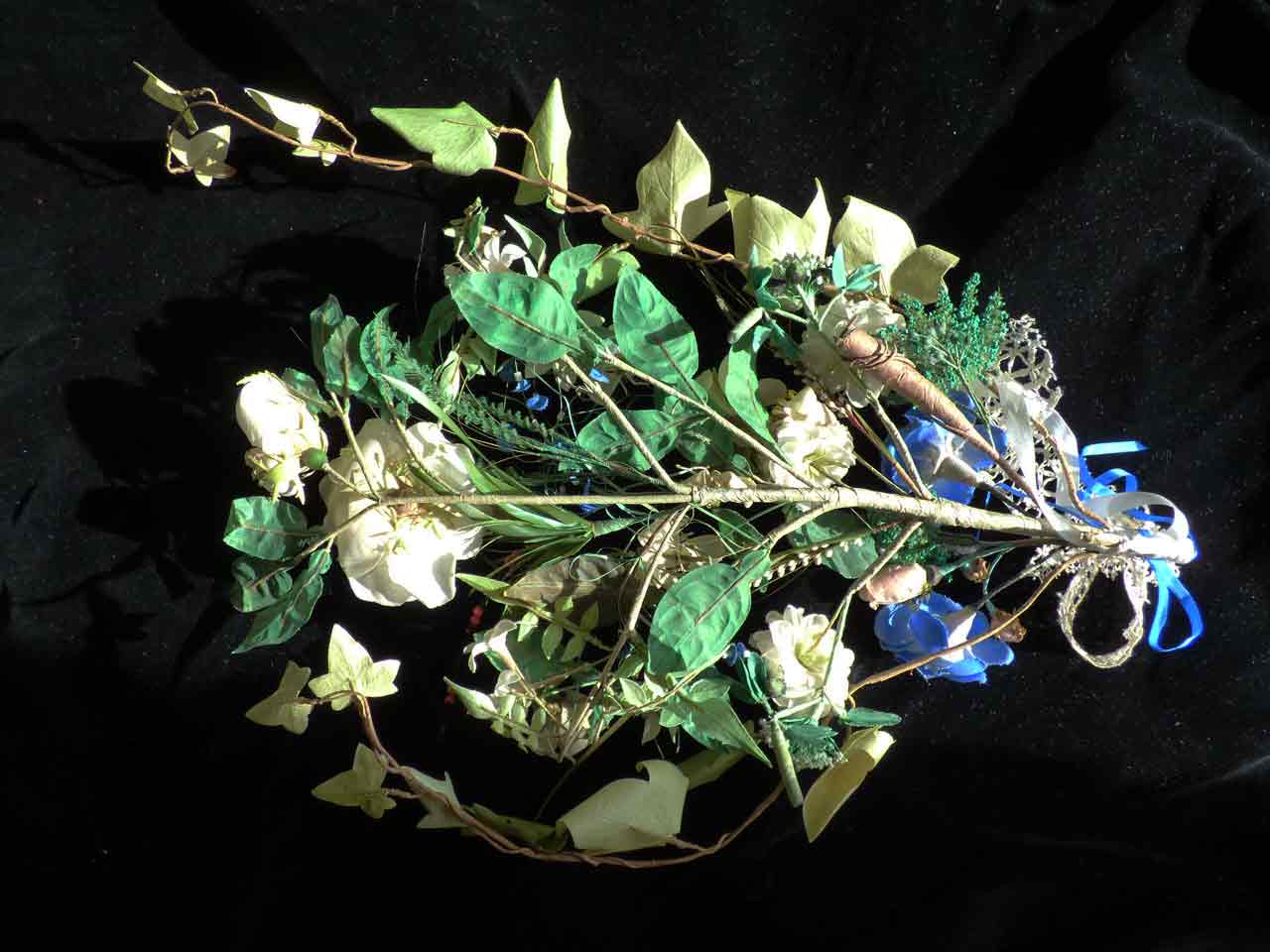
How Antique Flower Bouquets Were Made
There was no single recipe for an antique artificial flower. Surviving objects and period manuals instead reveal an extraordinary variety of materials and techniques.
Petals might be cut from silk or fabric and moulded into shape. Wax could imitate the translucent surface of natural petals or coat textile components. Paper might form leaves, stems or structural elements, while fine wire provided strength without sacrificing the flexibility needed to position flowers naturally.
Several of these materials could meet within a single bloom. Period instructions for wax flower-making, for example, describe natural flowers being carefully dismantled and used as models. Paper patterns were taken from individual petals, which were then reproduced in wax, coloured and shaped before being mounted on wire.
Other techniques used woven or knitted fibres, but followed a similar principle: flowers and leaves were constructed separately and gradually assembled around a flexible wired structure.
Museum collections preserve bouquets and sprays made from combinations including waxed fabric, silk, cotton, paper, leather and metal wire. Two bouquets representing the same flower might consequently be made in completely different ways, depending on the maker, period, intended use and available materials — one of the qualities that makes antique floral work so fascinating to collect.
Flowers for the Bride: Bouquets, Sprays & Orange Blossom
Flowers became increasingly important elements of European bridal dress during the 19th century.
The Victoria and Albert Museum traces the emergence of the bridal bouquet as a focal part of the bride’s ensemble to around the 1840s, while earlier bridal fashion frequently relied on floral sprigs and wreaths worn on the dress or in the hair.
Few flowers became as closely associated with 19th-century bridal fashion as orange blossom. Its fragile natural flowers could be recreated artificially in a form capable of surviving the wedding day and potentially being preserved afterwards.
Queen Victoria wore artificial orange blossom in her wedding ensemble when she married Prince Albert in 1840, helping reinforce a fashion already developing in Europe.
Surviving pieces reveal the variety of forms these ornaments could take. Artificial orange-blossom sprays were made for bridal dresses, wreaths and favours, while the same craft could be used to create complete bouquets.
One particularly evocative example survives in the collection of the Palais Galliera in Paris: a French bridal bouquet dating to around 1890, composed of artificial orange blossoms and buds with textile leaves and stems formed from cotton and metal wrapped in paper.
Such objects place surviving antique flower bouquets firmly within the material history of dress rather than the world of modern decorative floristry.
Can We Read an Antique Bouquet Today?
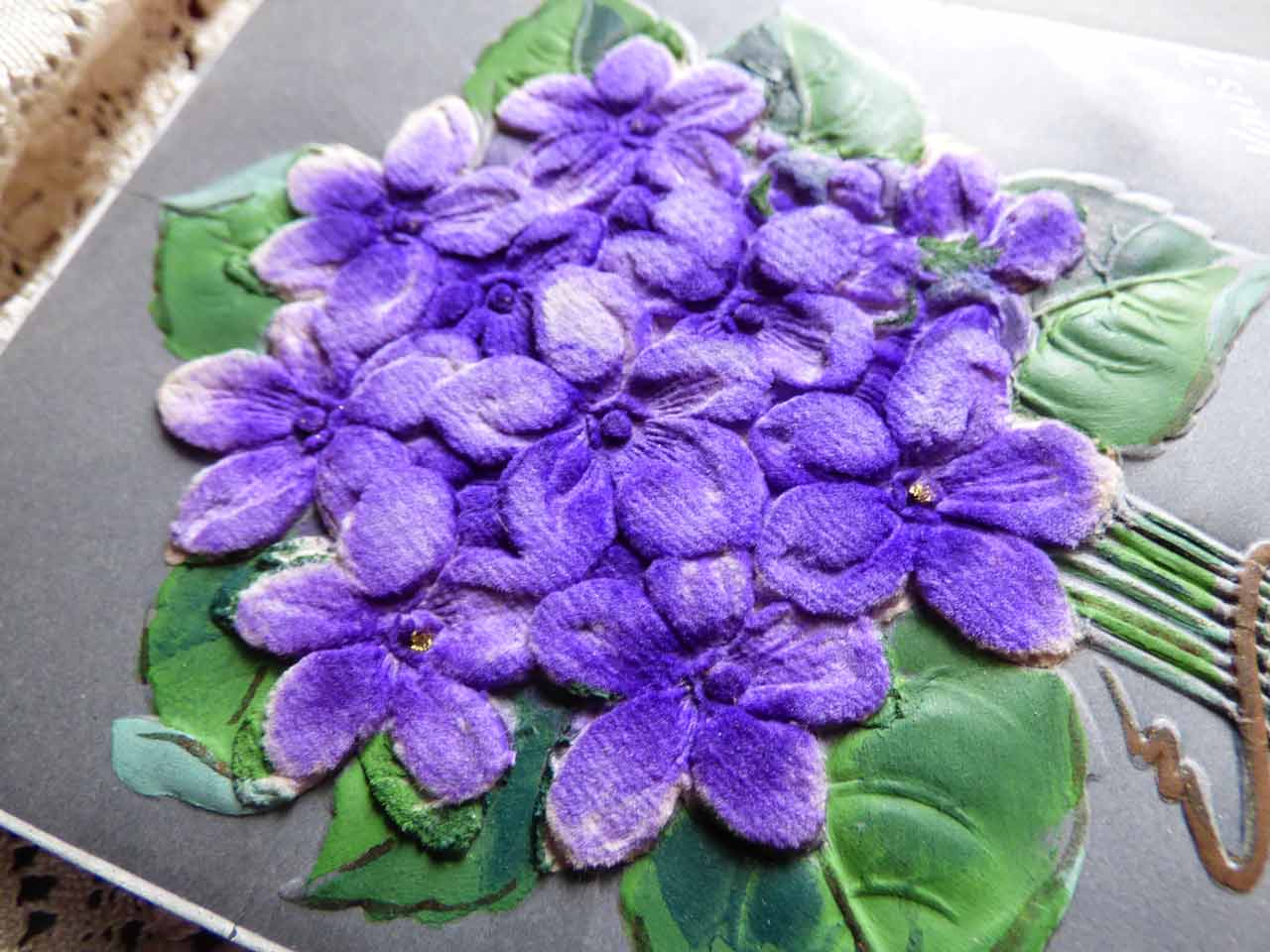
Floriography can help us understand how a 19th-century viewer might have interpreted particular flowers, but it should not be treated as proof of the original maker’s intention.
A bouquet containing violets, for example, can legitimately be considered alongside the symbolic meanings assigned to violets in contemporary flower dictionaries. Without provenance or documentary evidence, however, we cannot know whether its maker deliberately intended one particular message.
That uncertainty leaves room to appreciate an antique bouquet on several levels at once: as a fashion object, a work of craftsmanship, a botanical representation and a possible carrier of personal sentiment.
From Bodice to Bouquet: The Flower Corsage
The history of the flower corsage is reflected in the word itself.
In French, corsage originally referred to the upper part or bodice of a woman’s dress. In English, the word gradually became associated with the small arrangement of flowers worn on that part of the body.
Rather than being carried like a bouquet, a corsage became part of the wearer’s silhouette. Flowers could be pinned or otherwise secured to a bodice, neckline or another part of the dress, adding colour and botanical ornament while leaving the hands free.
Artificial flowers were particularly well suited to this purpose. Wired stems gave arrangements flexibility, while textile flowers could be lighter and more durable than many fresh alternatives.
Surviving photographs from around 1900 show women wearing flowers both in their hair and on their dresses, illustrating how naturally floral ornaments belonged to fashionable dress. An antique flower corsage can therefore be understood not simply as a miniature bouquet, but as a wearable fashion accessory in its own right.
Flowers for Love, Marriage & Remembrance
Flowers accompanied many of the most important moments of 19th-century life, from courtship and weddings to remembrance and mourning.
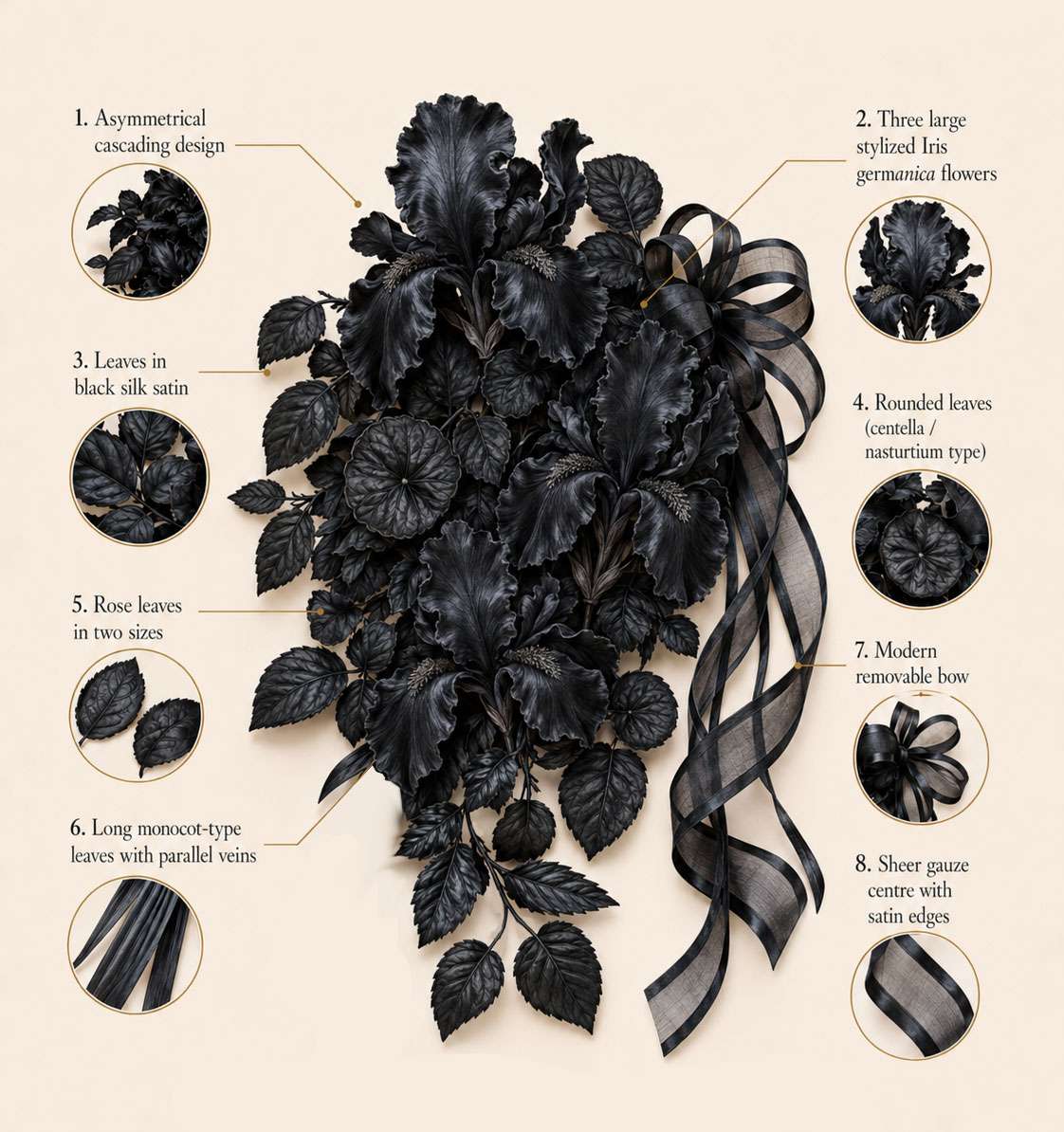
Victorian funeral culture made extensive use of elaborate floral compositions. Fresh flowers could be arranged on shaped wire frameworks to create wreaths, crosses, columns and other symbolic forms, while some surviving commemorative flowers were constructed from textiles and wax.
The survival of these traditions does not, however, allow every dark bouquet or floral arrangement to be assigned automatically to mourning. As with bridal flowers, materials, colour, construction, period and provenance need to be considered together before suggesting an original purpose.
This is the approach we follow at HankiesHandkisses. Where the evidence for an object’s history is strong, we describe it; where its original purpose remains uncertain, we prefer to preserve that ambiguity rather than give the object a history it cannot prove.
A white bouquet or orange-blossom spray, for example, may closely resemble documented bridal pieces, but its identification should depend on the complete object and the evidence surrounding it rather than colour alone.
Collecting Antique & Vintage Bouquets Today
Every surviving bouquet or corsage has already outlived the flowers it was created to imitate, carrying traces of both the period in which it was made and the craft behind its construction.
A vintage flower bouquet may preserve the fashion of a particular decade, the hand of an anonymous flower maker, the materials of a vanished industry and perhaps the memory of an occasion that can no longer be reconstructed.
Some pieces remain suitable for careful wear; others are better appreciated as collection or display objects because of their age, rarity or fragility.
Each bouquet and corsage in our collection is individually examined, photographed and described so that its construction, condition and any conservation or restoration can be understood before purchase.
These are not newly made floral arrangements inspired by the past, but original antique and vintage flower bouquets and corsages with a history of their own — surviving examples of the extraordinary floral craftsmanship that once accompanied fashion, ceremony and everyday life.