Antique Painted Cotton Velvet Pansy Corsage, c. 1890s
46,00€
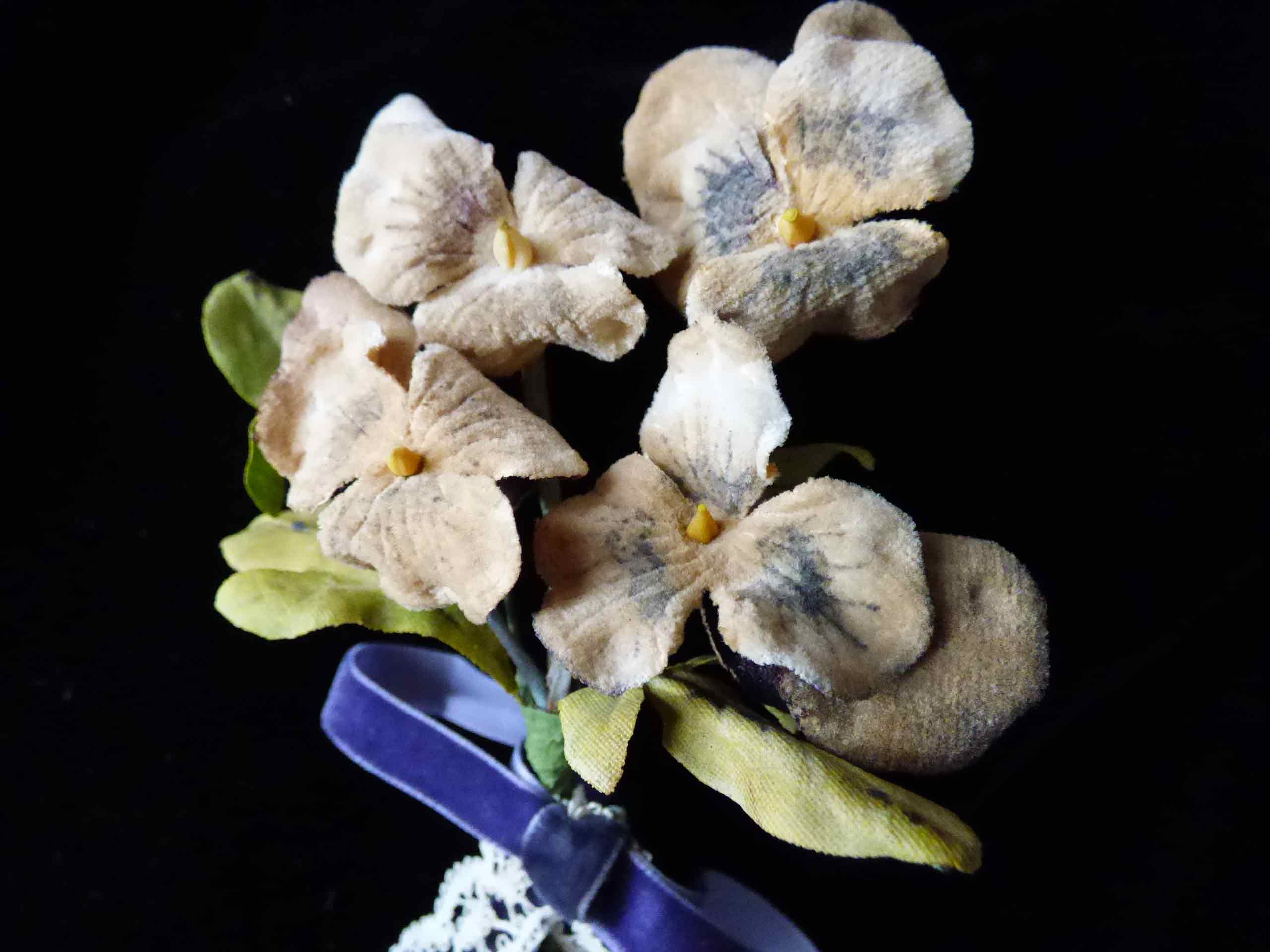
A charming late 19th-century corsage of hand-coloured cotton velvet pansies, dating to around the 1890s.
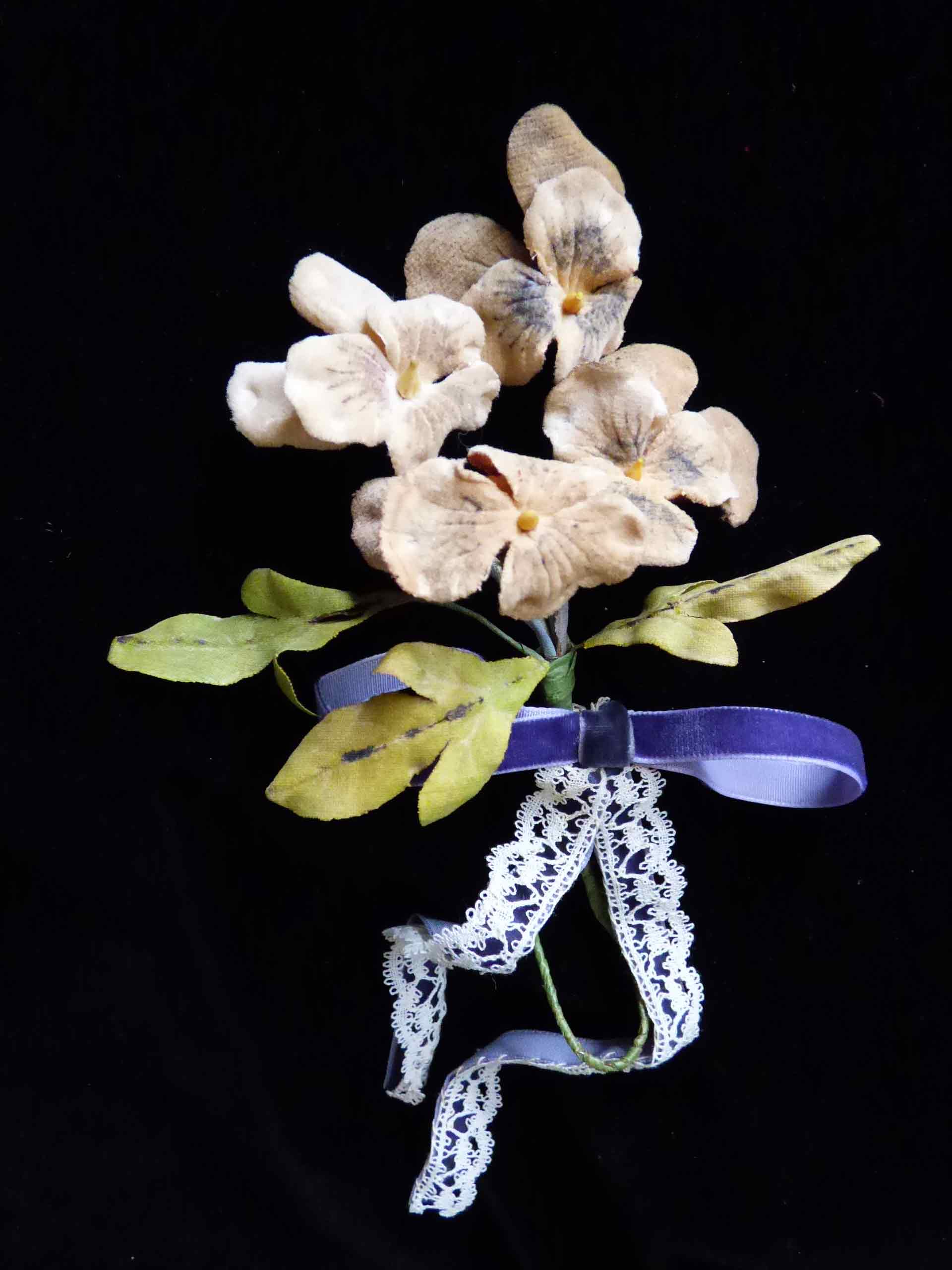
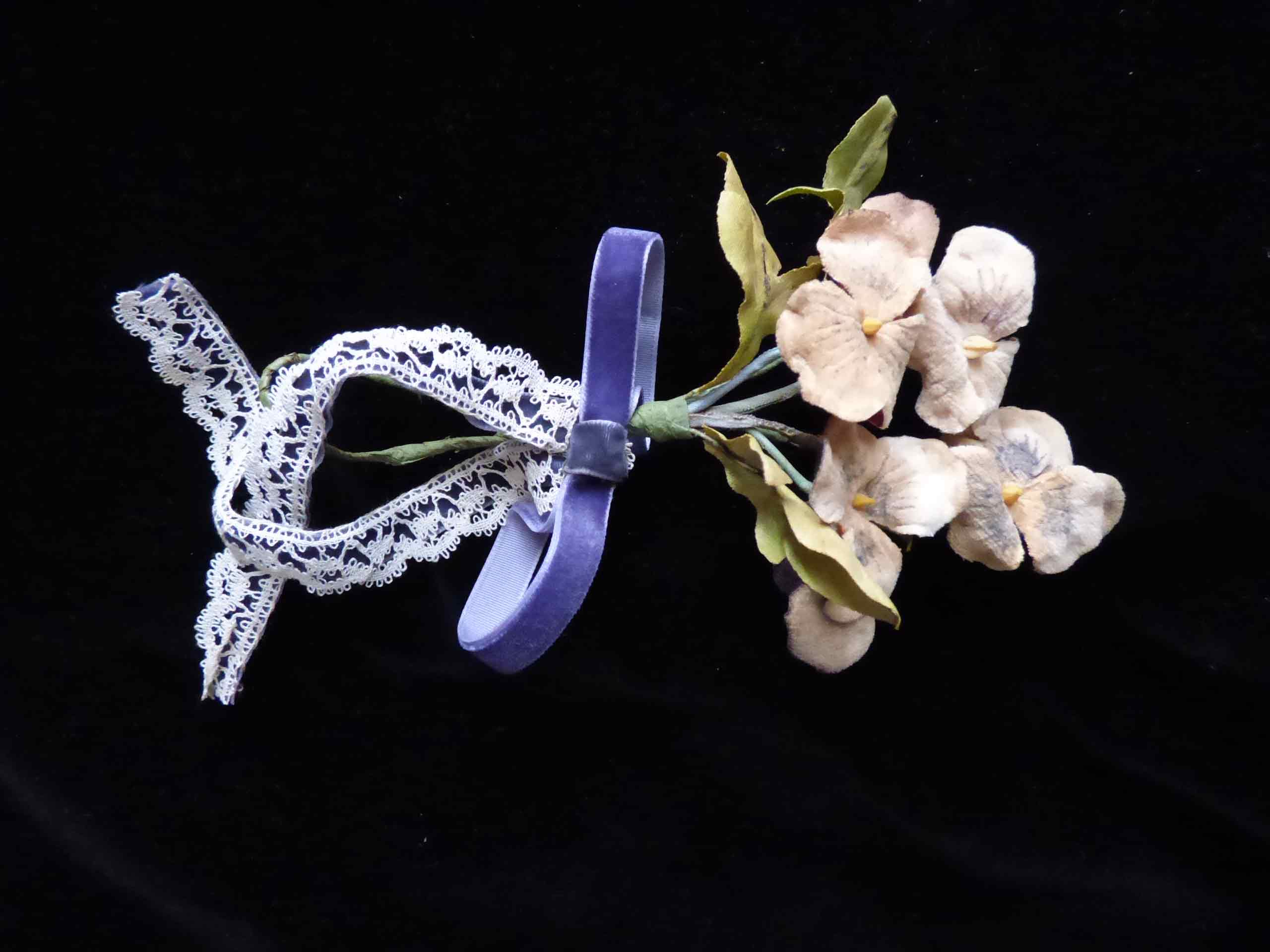
The softly faded flowers retain their painted violet markings and are arranged with textile leaves, wrapped wire stems, purple velvet ribbon and delicate lace.
A beautifully preserved example of Victorian artificial flower making, closely connected with the period fashion for velvet pansies in dress and millinery.
Description
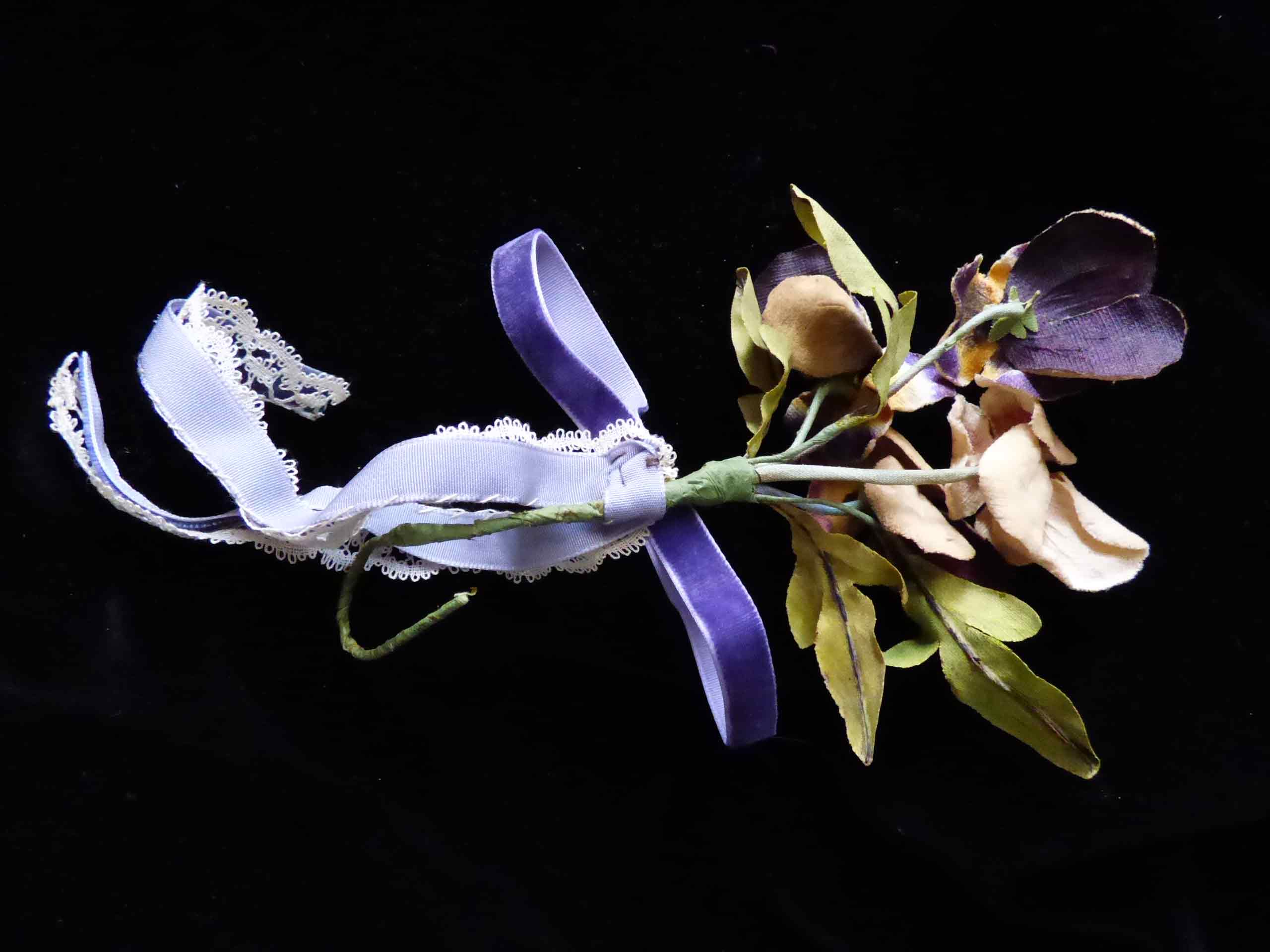
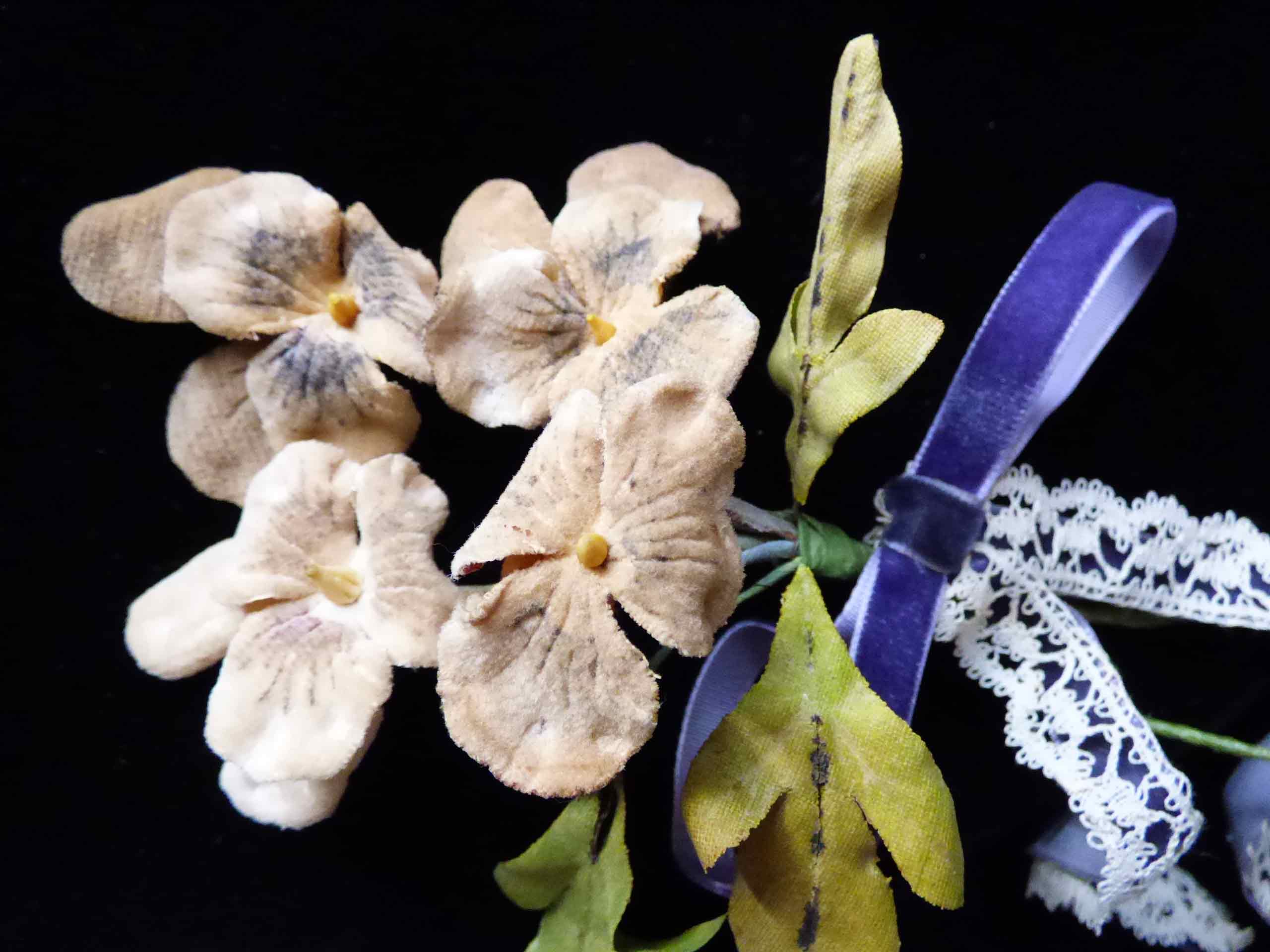
A beautifully preserved late 19th-century corsage of hand-coloured cotton velvet pansies, arranged as a small floral spray with painted textile foliage, wrapped wire stems, purple velvet ribbon and delicate white lace.
- Date: c. 1890s
- Dimensions: approx. 14 × 8 cm
- Individual pansies: approx. 4 × 5 cm
- Materials: cotton velvet, painted textile leaves, stamens, wrapped wire, velvet ribbon and lace
- Motif: pansies (Viola)
- Probable use: dress or personal ornament; also consistent with contemporary millinery flowers
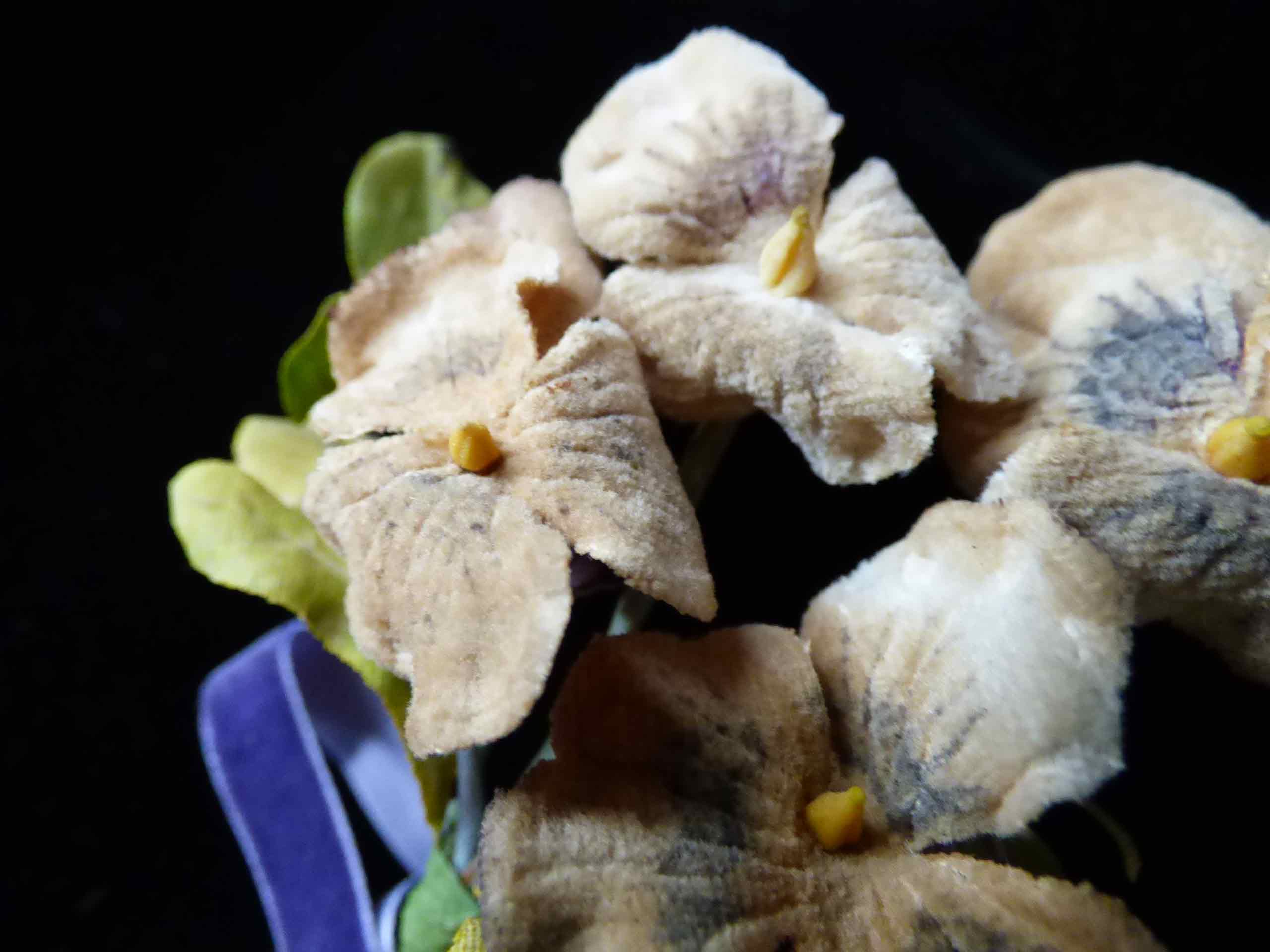
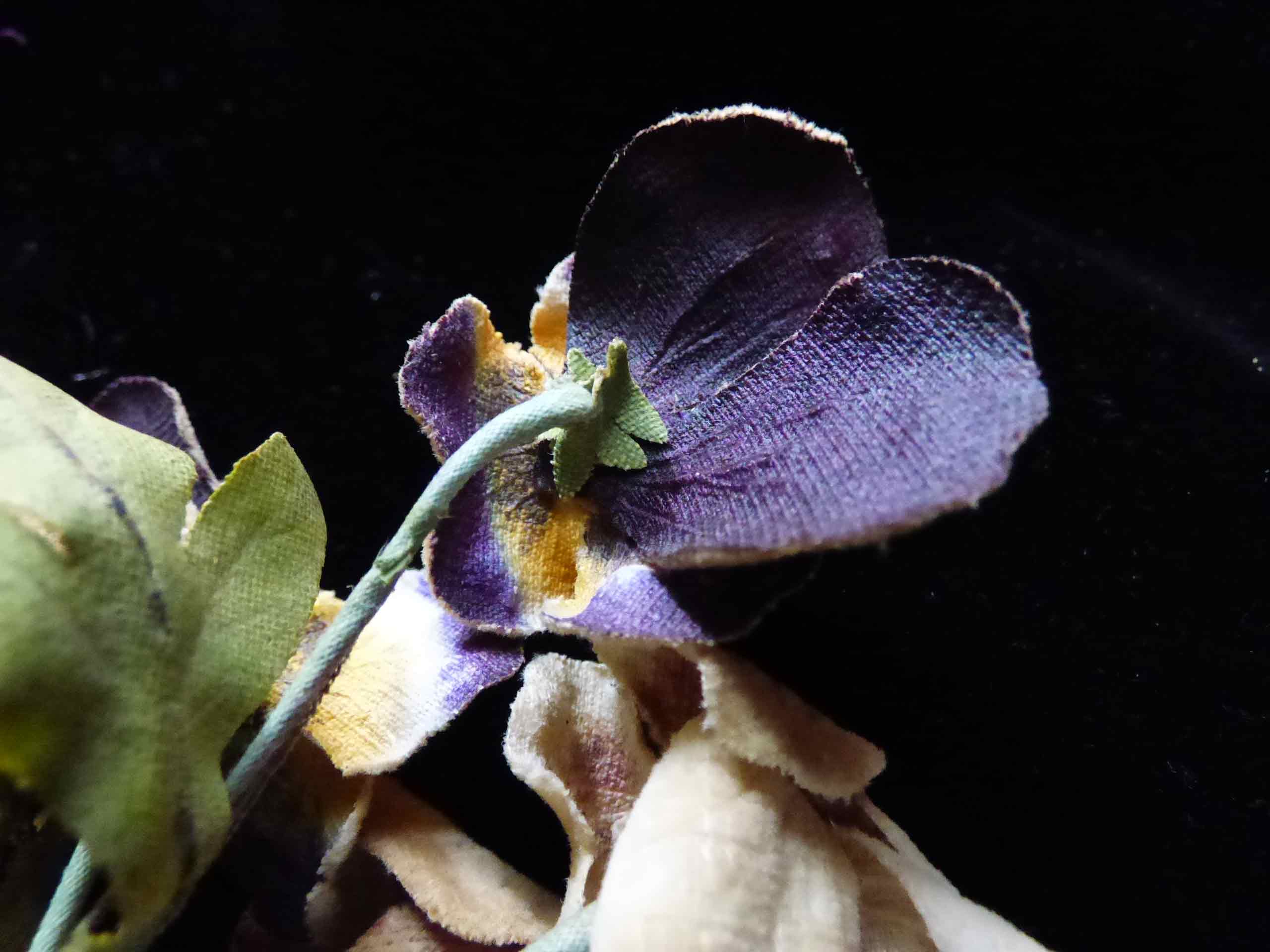
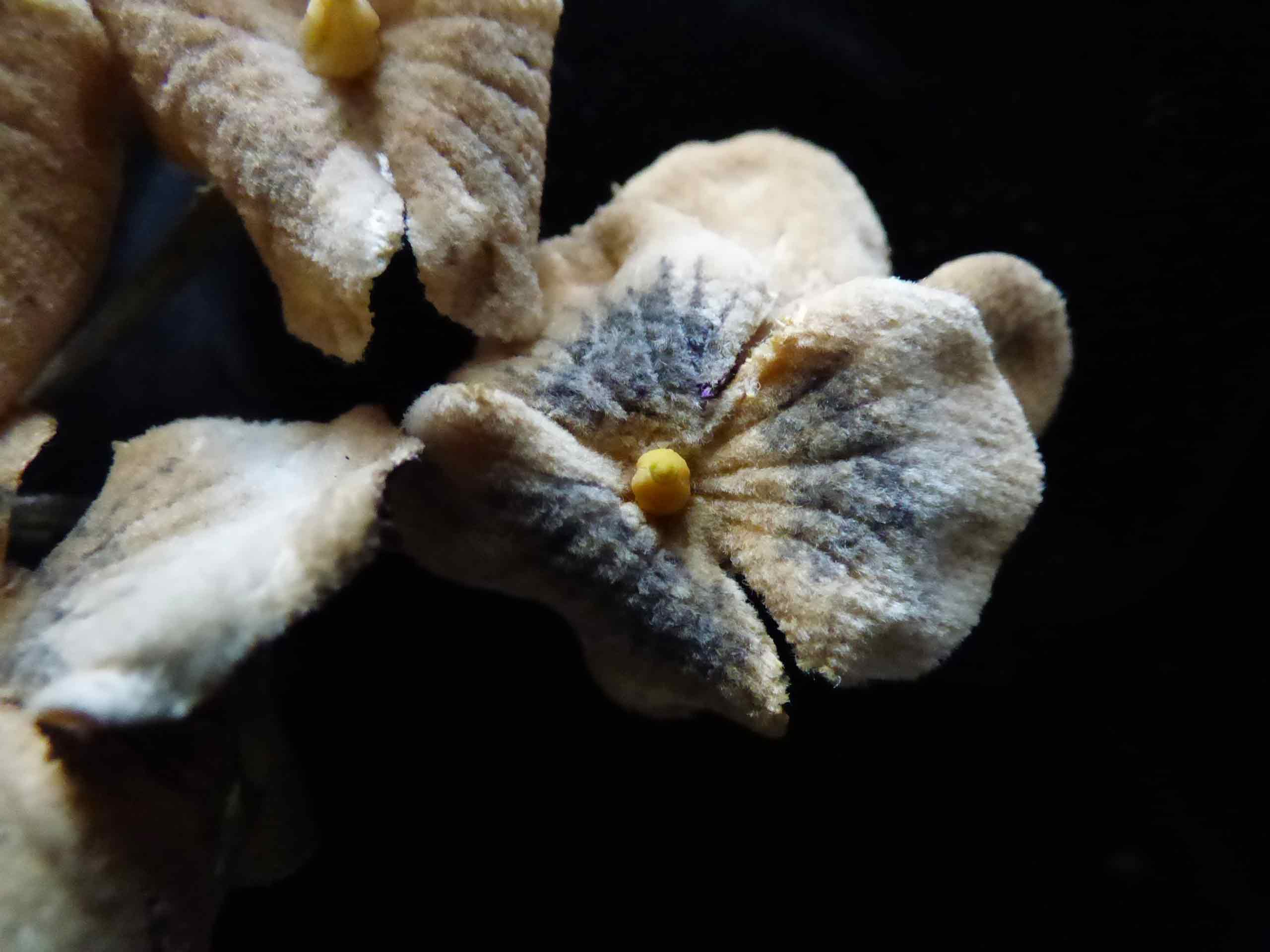
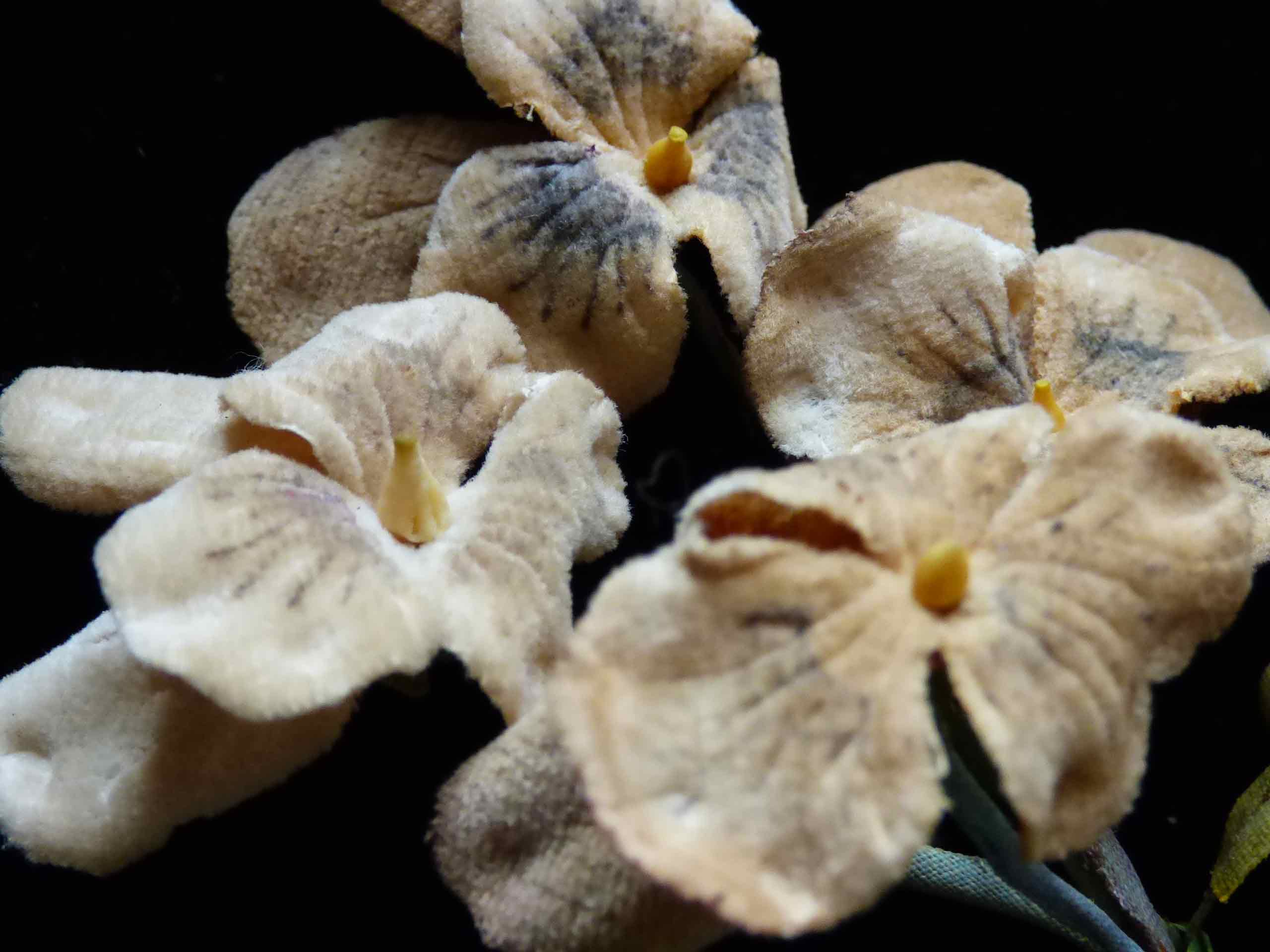
The corsage brings together a clustered group of remarkably naturalistic pansies. Each flower has been individually shaped from soft cotton velvet petals. Muted violet and grey markings radiate from the small yellow centres and recreate the veined appearance of the natural flower.
Time has softened much of the original colour into a subtle palette of cream, beige, faded mauve and smoky violet. This pronounced age patina enhances the velvety surface and gives each blossom an individual character.
Slender wrapped-wire stems support the flowers and painted textile leaves. Several leaves still retain dark vein-like details. A narrow purple velvet ribbon and fine white lace complete the composition.
Velvet Pansies and Late Victorian Fashion
Artificial flowers had formed part of fashionable dress for decades, but velvet pansies appear especially clearly in sources from the 1890s.
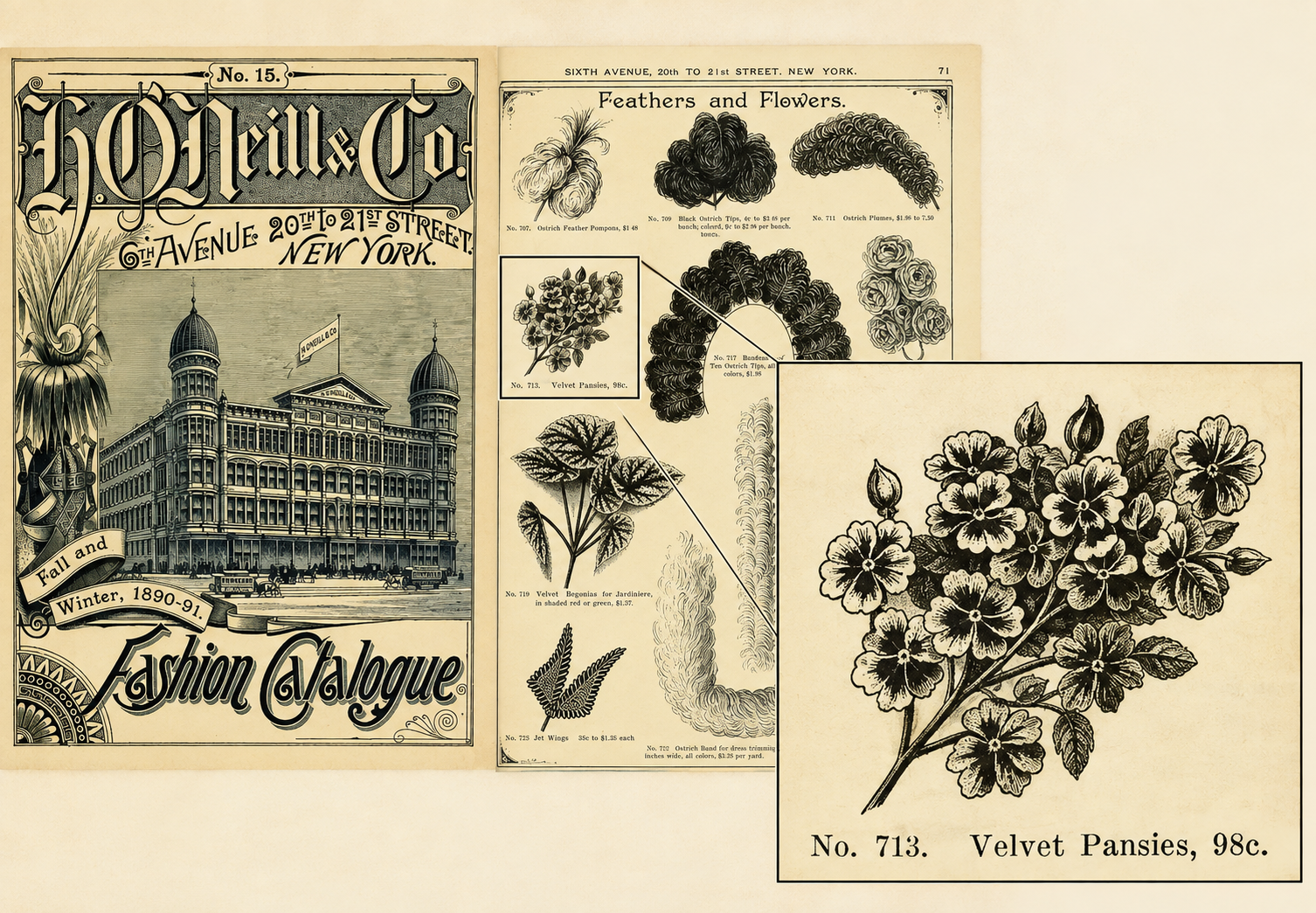
An 1890–91 catalogue issued by the New York department store H. O’Neill & Co. lists velvet pansies among the fashionable ornaments offered in its “Feathers and Flowers” department:
“No. 713. Velvet Pansies, 98c.”
The simplicity of the entry is revealing: by the beginning of the decade, velvet pansies were already being sold as a recognisable commercial category of artificial flower.
Contemporary fashion writing also shows how women wore them. In February 1890, The Ladies’ Home Journal described a pansy toque decorated with:
“rich purple velvet pansies”
The flowers formed a wreath around the toque, with another cluster arranged at the front. This provides a particularly close contemporary reference for the use of velvet pansies in millinery.
The fashion continued through the decade. An 1895 fashion report described a flower toque combining velvet pansies with lace, an especially evocative parallel for the materials found in this corsage.
By the end of the decade, velvet pansies were still commercially available. An 1899 American advertisement offered entire bunches of:
“Silk and Velvet Pansies”
The same advertisement listed roses, daisies, forget-me-nots, poppies and lilies made in similar materials.
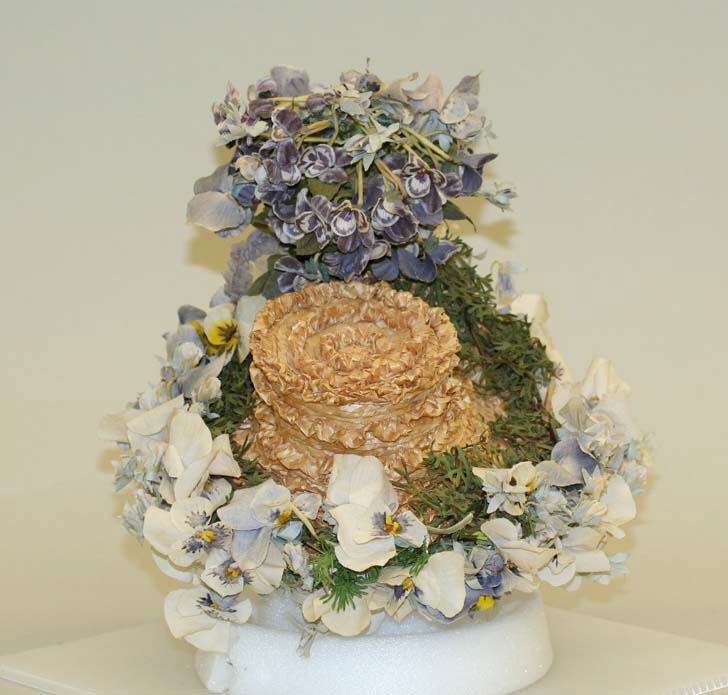
Museum collections provide further context. The Metropolitan Museum of Art preserves a hat dating to c. 1890–93, attributed to the American maker Louise. Published descriptions identify artificial violets and pansies among its embellishments, together with lavender silk chiffon.
Taken together, these contemporary sources provide a close historical context for the materials, construction and possible use of this corsage. They also support a probable 1890s date. However, the absence of a maker’s label prevents a more precise attribution.
Hand-Coloured Artificial Flowers
The painted markings on the cotton velvet petals offer another important clue to late 19th-century artificial-flower making.
An 1896 account of artificial-flower manufacture explains that pansies required a different treatment from flowers whose gradations could be achieved primarily through dyeing. The petals first received a ground colour. Workers then used fine brushes to reproduce the characteristic contrasting markings of the flower:
“Several men were busily working, a palette in one hand and a delicately-pointed paint brush in the other, putting little dabs of purple and yellow on petals of muslin cut into the shape of pansies.”
The reporter captured the speed and effectiveness of the process in an especially vivid phrase:
“A dash here, a dab there, and the eye of the pansy stood revealed.”
This contemporary description provides a striking parallel for the surviving violet-grey markings on the cotton velvet petals of this corsage. It also shows that late 19th-century artificial-flower makers deliberately painted the distinctive “face” of the pansy rather than relying solely on the underlying colour of the textile.
The account refers specifically to muslin petals, while the flowers in this corsage are made from cotton velvet. We therefore cannot assume that their makers followed precisely the same process. Nevertheless, the source documents the contemporary practice of applying painted details by hand to textile pansies in order to reproduce their natural botanical markings.
Decorated cotton velvet also belongs comfortably within late 19th-century textile practice. The Metropolitan Museum of Art preserves a printed and woven cotton velvet by Candace Wheeler and Associated Artists, dated 1883–1900, demonstrating the sophisticated use of colour and pattern on cotton velvet during the same period.
The Pansy in the Language of Flowers
The choice of the pansy also gave the corsage a strong sentimental resonance.
The flower’s association with thought and remembrance lies in its name. The English word pansy derives from the French pensée, meaning “thought.”
Nineteenth-century flower dictionaries therefore associated the pansy with closely related messages such as “thoughts,” “think of me,” “you occupy my thoughts” and “remembrance.” The wording varied between publications, as was common within the Victorian language of flowers.
A particularly attractive contemporary example survives in the collection of the Metropolitan Museum of Art. The 1892 chromolithograph Pansy: Thoughtfulness, from the series Floral Beauties and Language of Flowers, explicitly connects the pansy with thoughtfulness.
The flower thus belonged to a broader late 19th-century vocabulary of thought, memory and affectionate remembrance. This made it especially appropriate for personal floral ornaments and gifts.https://www.metmuseum.org/art/collection/search/423348?utm_source=chatgpt.com
Contemporary Visual References
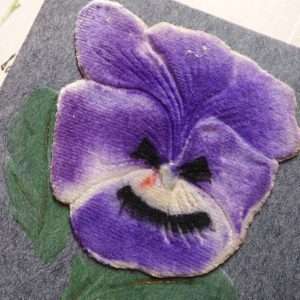
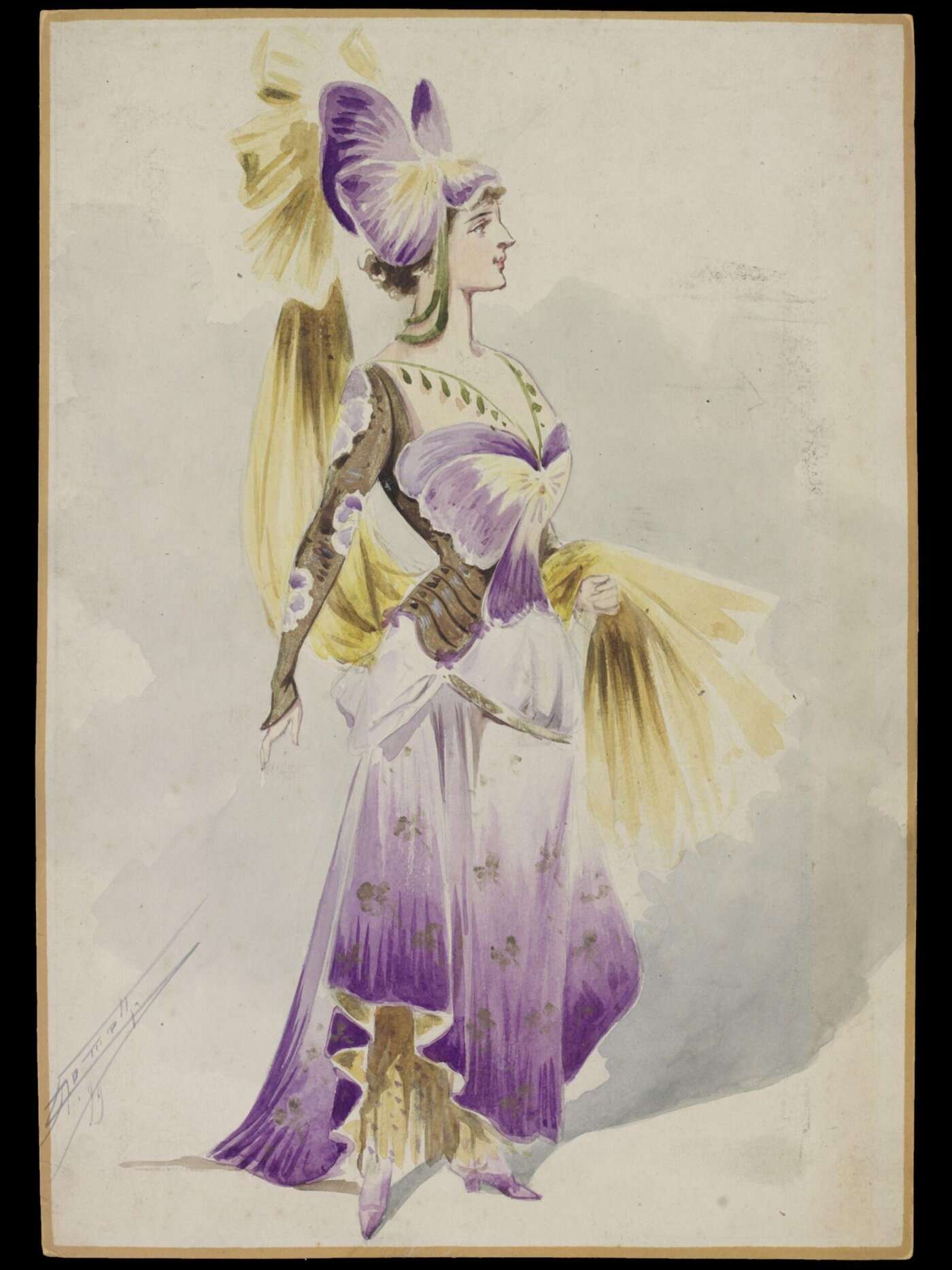
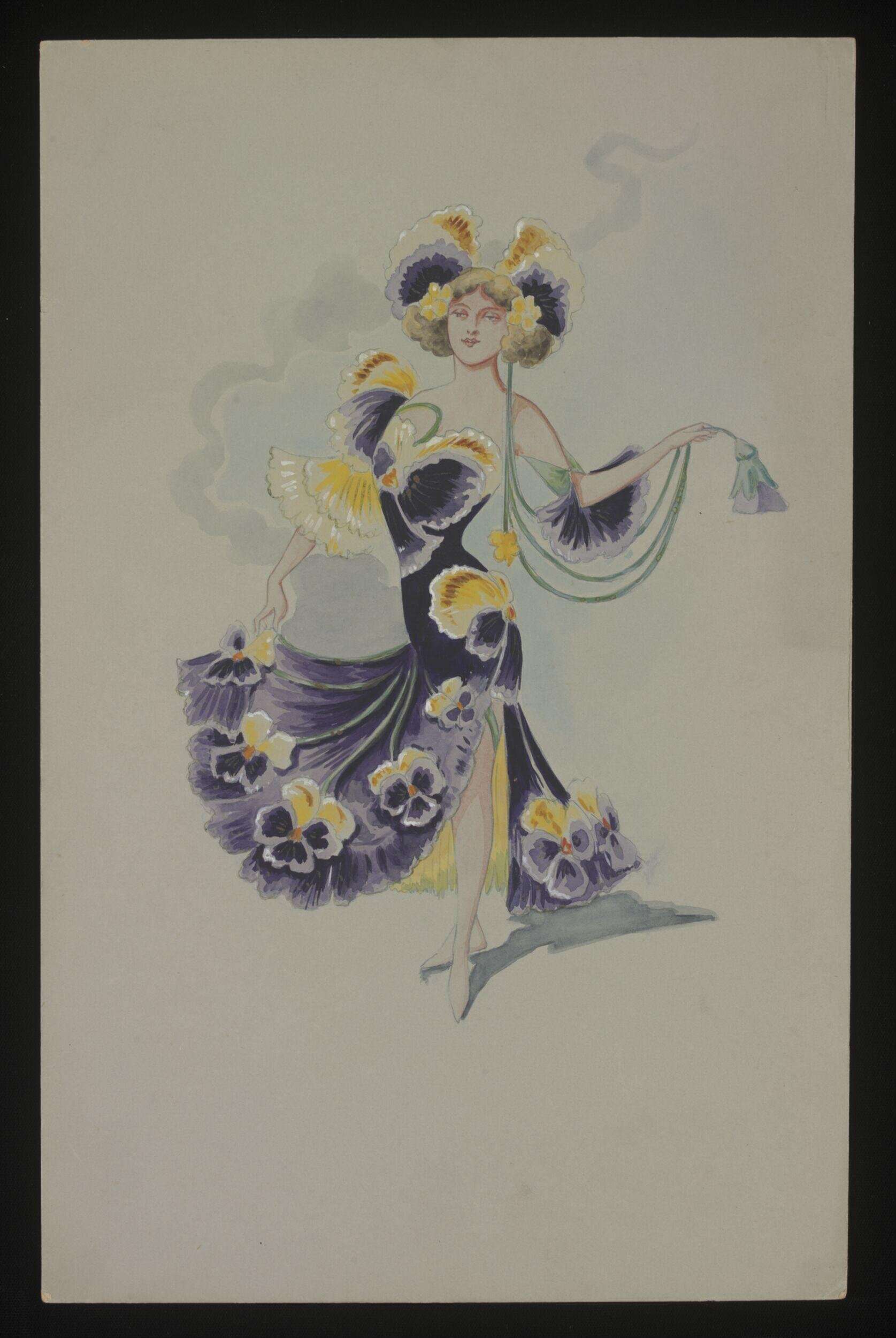
The pansy also formed part of the wider decorative vocabulary of late 19th-century fashion and costume. Several contemporary costume designs preserved in the Victoria and Albert Museum provide evocative visual comparisons:
- Costume designs by Attilio Comelli — Victoria and Albert Museum, O1220728 and O1174038
- Costume design — Victoria and Albert Museum, O1174036
These works serve as contemporary aesthetic and historical references. They illustrate the presence of the pansy within the visual culture of dress and costume, but they have no direct connection with the manufacture or provenance of this corsage.
Condition
The corsage survives in original antique condition with pronounced fading, tonal variation, surface wear and minor irregularities. These features are consistent with its age and the fragile nature of its materials.
The faded cotton velvet forms an important part of the object’s present appearance. Traces of violet and darker painted markings remain visible across the petals. The foliage also retains areas of its original green colouring and painted detail.
This beautiful patina documents more than a century of age and gives the flowers their distinctive muted palette.
Please examine all photographs carefully, as they form an integral part of the description.
Additional information
| Flower Product | Bouquets |
|---|
Related products
-


Vintage millinery rose and rosebuds 1930s French Flower. Hat’s trim vintage flowers
26,70€ Add to cart -

2 Vintage silk aplique ✿✿ flowers ✿✿. French floral cards 1900
18,00€ Add to cart -
14 Antique Floral Postcards with Textile Flowers & Silk Ribbons
56,00€ Add to cart -

Antique velvet rose applique. French floral card 1900s
22,00€ Add to cart