A Rare Nineteenth-Century Floral Dress Ornament
52,00€
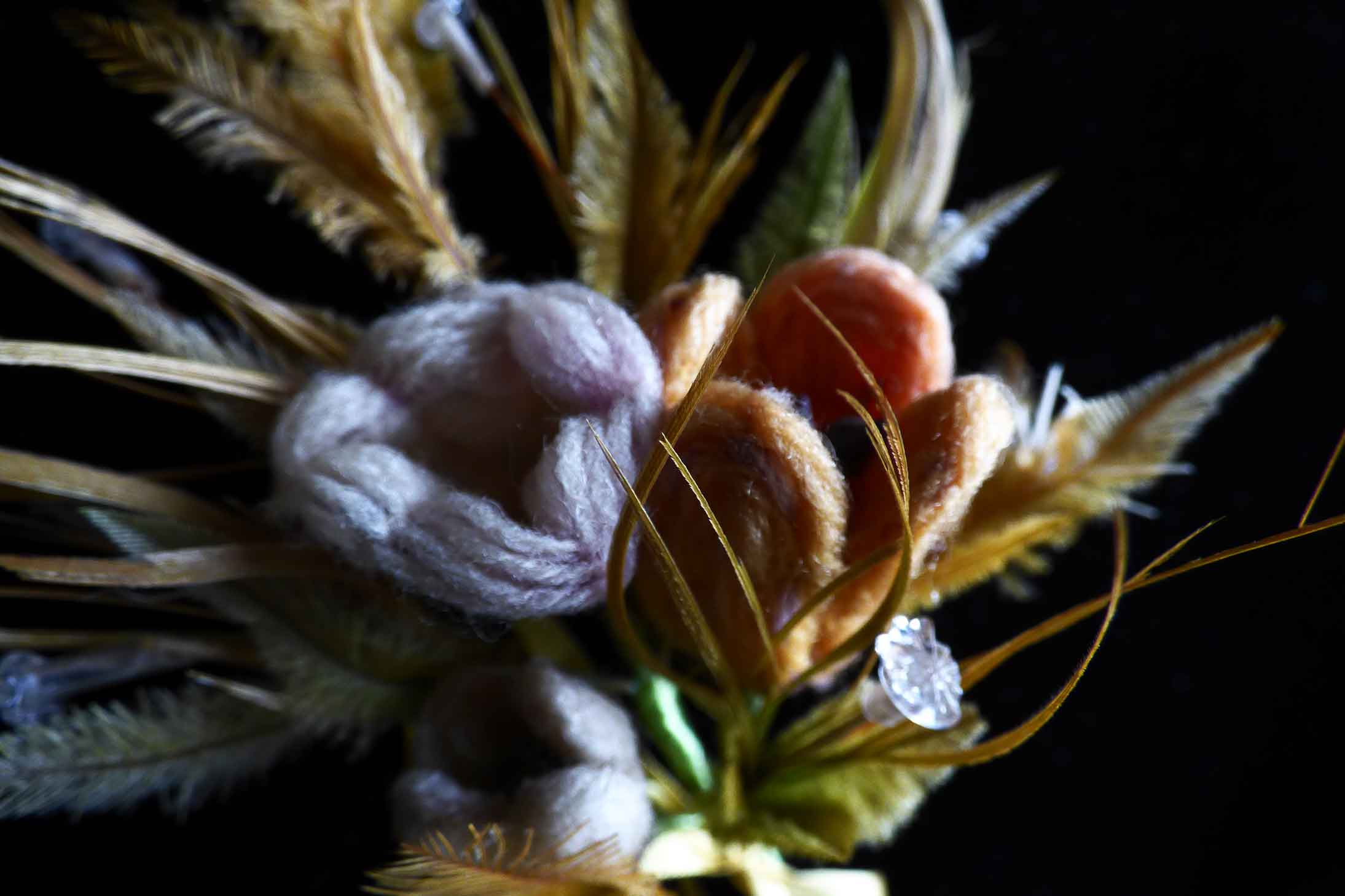
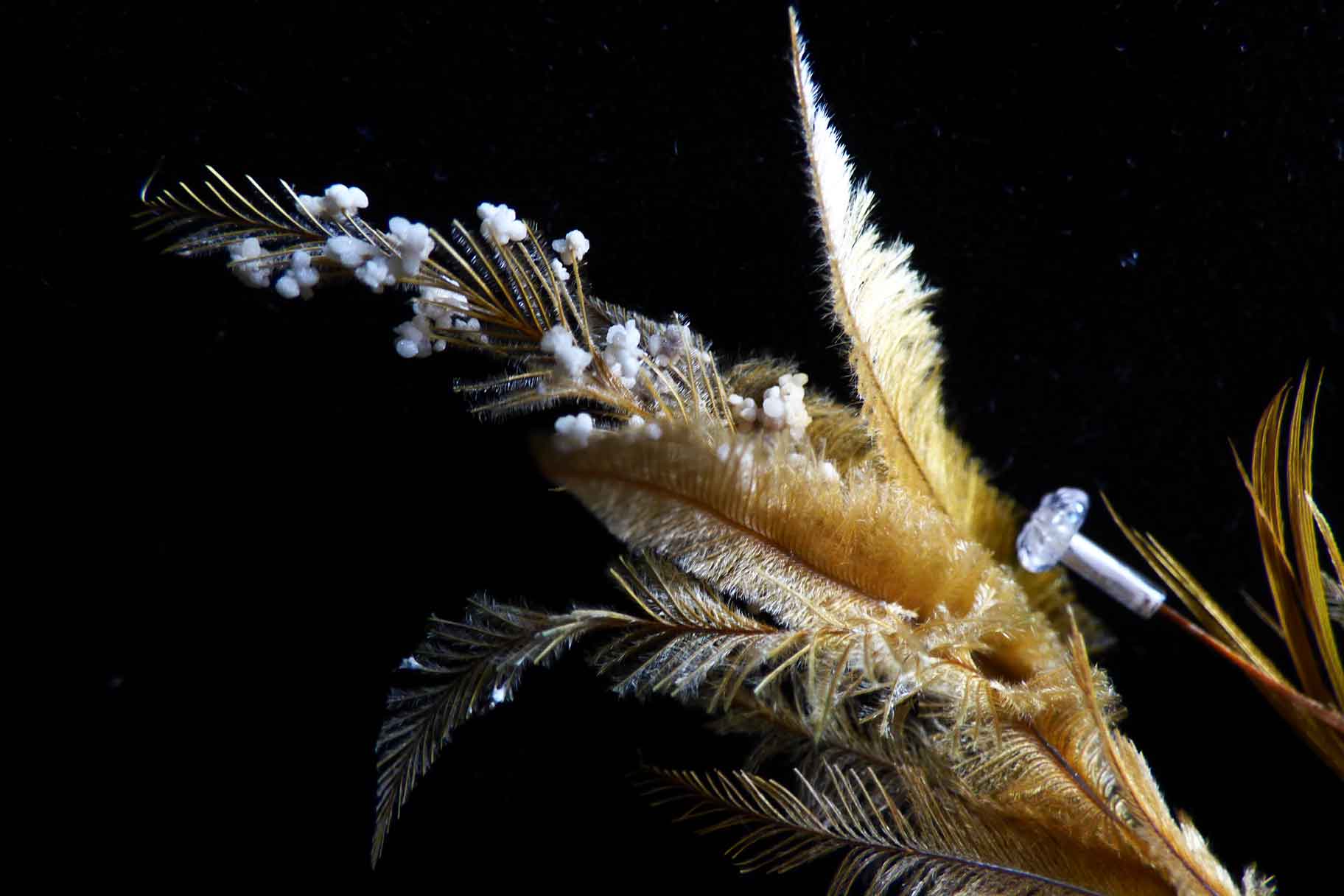
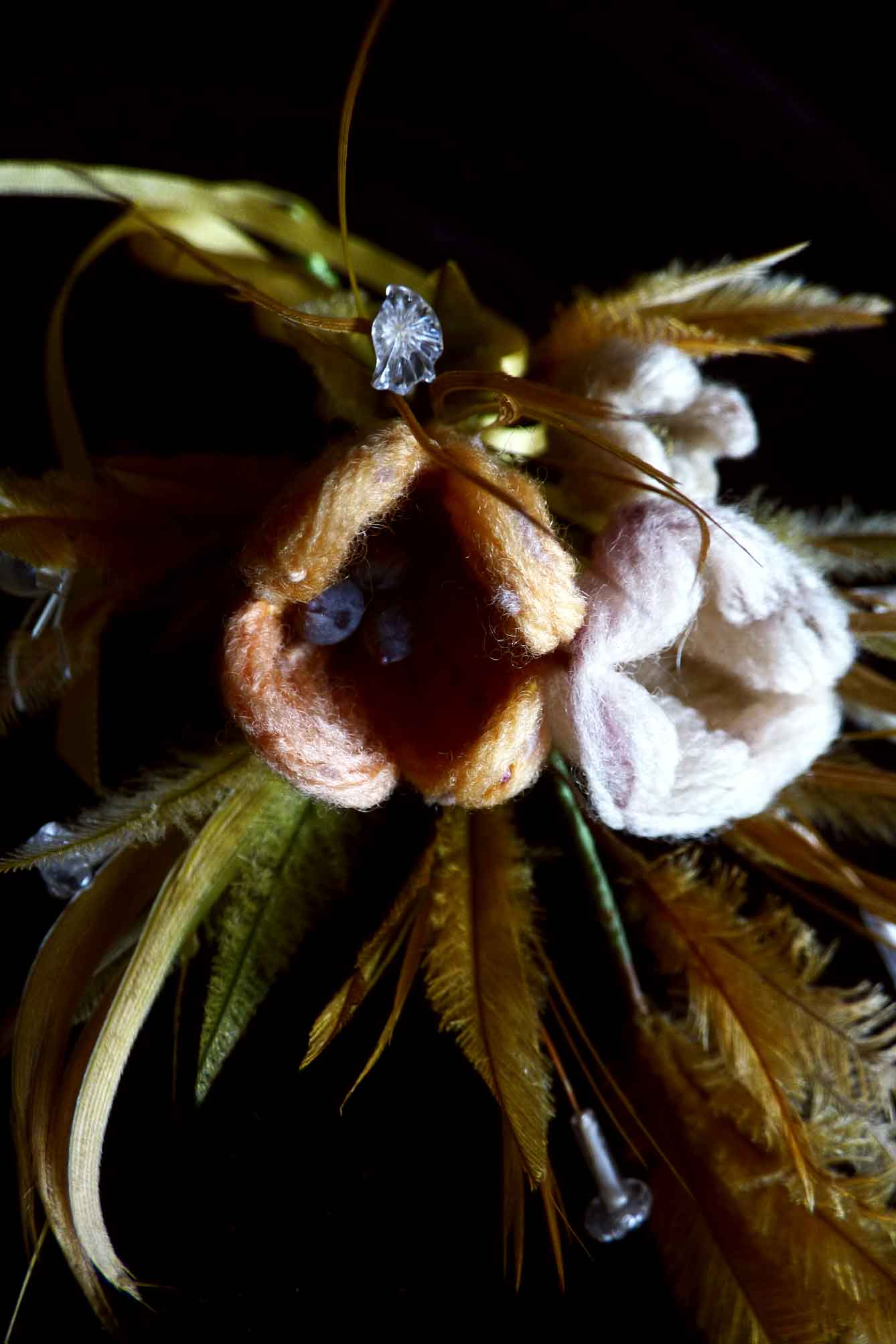
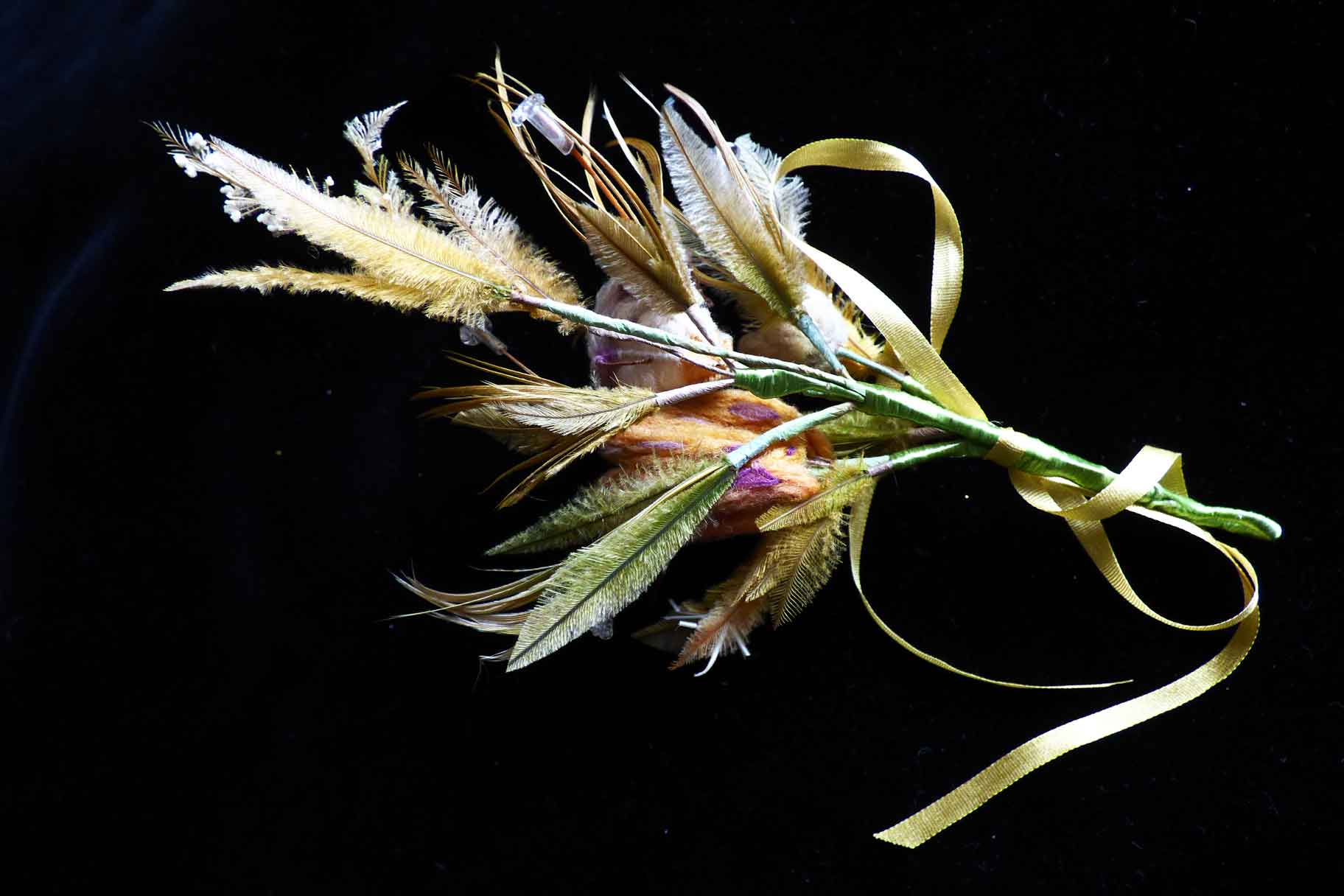
Rare antique French Victorian corsage dating to c. 1880s, with handmade three-dimensional wool flowers, delicate feather foliage, tiny glass buds, wrapped wire stems and removable silk ribbon.
This unusual nineteenth-century floral dress ornament is a beautiful example of Victorian fashion accessories and antique artificial flower work, with strong appeal for collectors of French antiques, historical textiles, antique millinery, Victorian costume and wool flower decorations.
Carefully restored and documented with period and museum references.
Description
Victorian Floral Dress Ornament
This exceptionally delicate Victorian wool flower corsage is a French floral dress ornament dating to around the 1880s and possibly earlier. It combines handmade three-dimensional wool flowers with feather foliage, tiny glass buds, wire and silk ribbon.
What makes this piece particularly unusual is the construction of the flowers themselves. Rather than the more usual fabric flowers, each bloom uses wool arranged around a fine wired structure. As a result, the flowers have remarkable softness, volume and a distinctly three-dimensional appearance.
- Date: c. 1880s, possibly earlier
- Period: Victorian
- Origin: France
- Object: Corsage / floral dress ornament
- Materials: Wool, feathers, glass, silk ribbon and wire
- Construction: Handmade three-dimensional wired flowers
- Overall length: approximately 15 cm / 5.9 in
- Floral spray: approximately 9 cm / 3.5 in
- Condition: Carefully cleaned and restored; wearable with appropriate care, but delicate due to its age
- Silk ribbons: Removable
In addition, the maker combined the wool flowers with extremely delicate feather foliage and tiny glass buds. The wired stems gather into a compact floral spray finished with silk ribbon.
Consequently, the ornament feels exceptionally light and naturalistic. These qualities made floral sprays particularly suitable for wearing on a dress or bodice.
The corsage has undergone careful cleaning and restoration and remains wearable with appropriate care. You can also remove the silk ribbons easily if preferred.
Moreover, this delicate survivor offers an unusual example of nineteenth-century decorative flower-making. It would make a particularly interesting addition to a collection of Victorian fashion, antique artificial flowers, historical dress accessories or textile art.
This is an authentic nineteenth-century object rather than a modern reproduction. Therefore, minor irregularities and traces of age form part of its history and character.
Victorian Wool Flower Corsage: Historical Context
The wool flowers are the most distinctive feature of this Victorian wool flower corsage.
Period publications and museum collections document the use of wool and fine wire to make three-dimensional flowers during the nineteenth century. Importantly, these pieces did not simply reproduce flowers through embroidery. Instead, makers shaped wool around fine wire frameworks to create individual petals, flower centres and complete three-dimensional blooms.
The National Museum of American History, Smithsonian Institution, holds several surviving Victorian examples. Together, they provide particularly interesting material and visual comparisons for the present corsage.
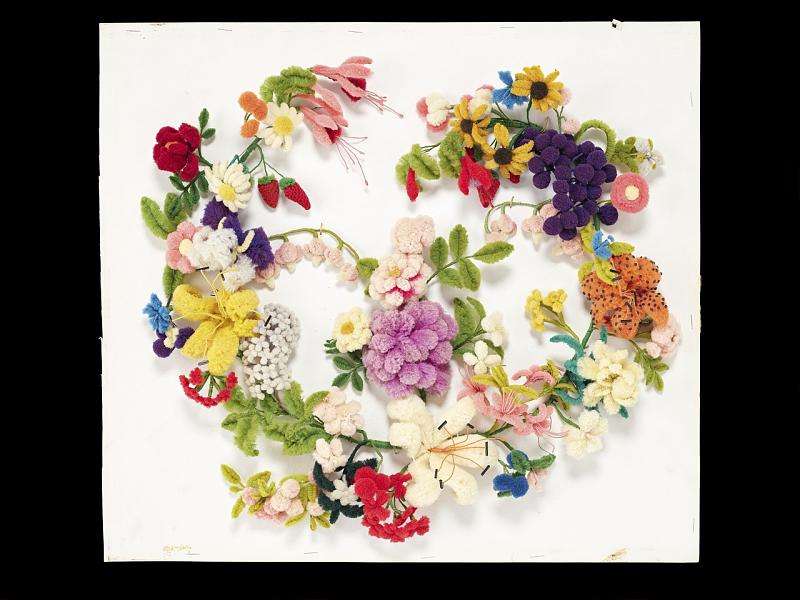
Woolwork Floral Wreath by Celestia Very Morey, c. 1870
One of the clearest surviving parallels is a floral wreath made around 1870 by Celestia Very Morey in New York.
The Smithsonian describes the piece as Zephyr woollen yarn worked in plush technique over a wrapped wire frame. The wreath includes numerous individual flowers, among them lilies, fuchsias, lilacs, daisies and black-eyed Susans.
Although this wreath served as a decorative object rather than a dress accessory, its three-dimensional wool flowers clearly demonstrate how Victorian makers could create naturalistic floral forms from wool and wire.
- Collection: National Museum of American History, Smithsonian Institution
- Object: TE.T14402.00A / nmah_643624
- Date: c. 1870
- Source: Smithsonian Institution
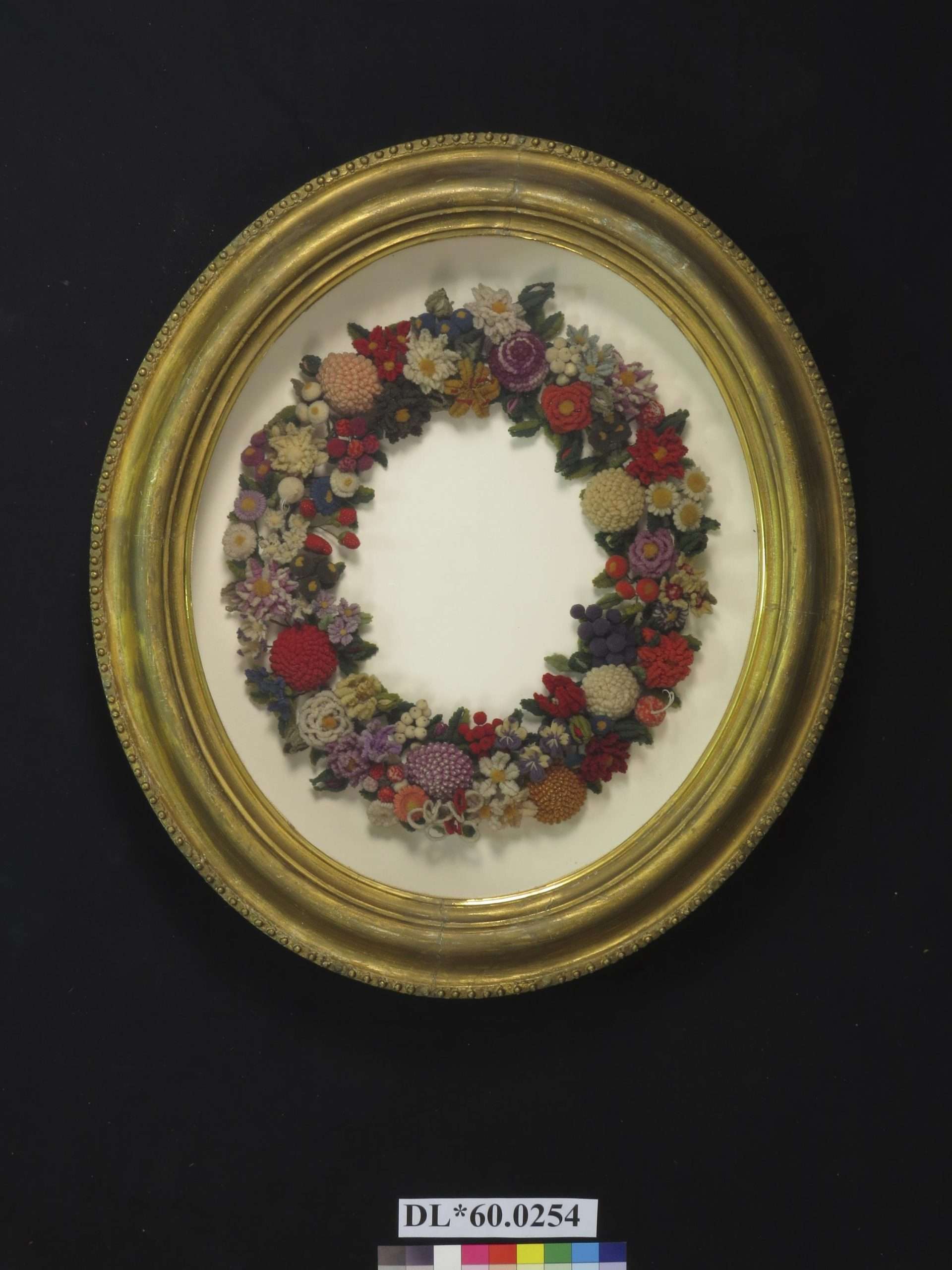
Wool Wreath, 1864–1865
A second Victorian wreath in the Smithsonian collection dates from 1864–1865.
Significantly, the Smithsonian catalogue lists yarn, feathers and wire among its materials. The presence of feathers within a wired floral composition makes this example especially relevant to the present French corsage. Likewise, our corsage combines soft textile flowers, wire and extremely delicate feather foliage.
- Collection: National Museum of American History, Smithsonian Institution
- Object: DL.60.0254 / nmah_314014
- Date: 1864–1865
- Source: Smithsonian Institution
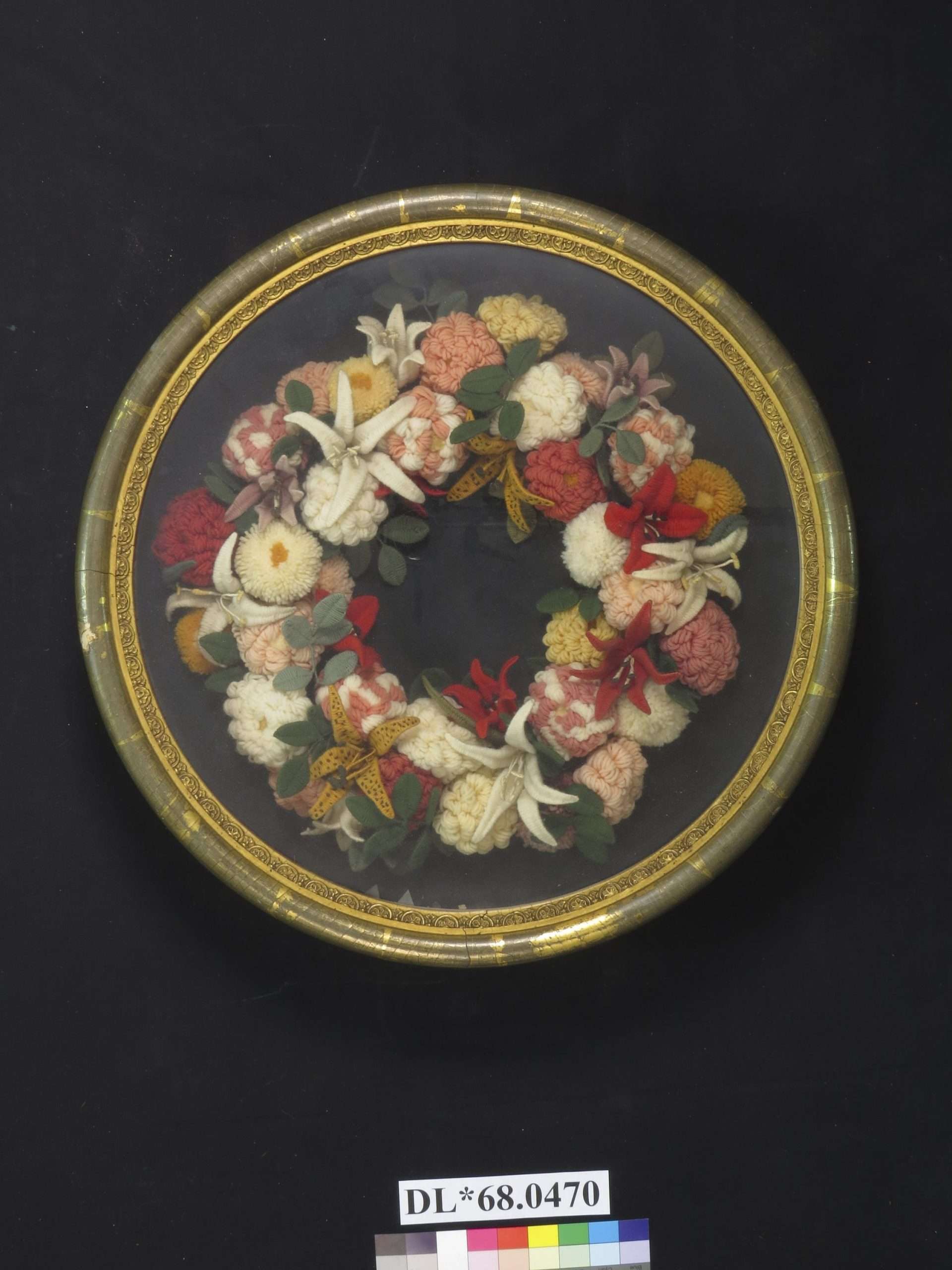
Woolwork, 1880–1890
Another Smithsonian example dates from 1880–1890, almost exactly the period proposed for this corsage.
The museum catalogues the arrangement as three-dimensional woolwork and associates it with both Flowers and Wool. Yarn and wire create a substantial floral composition with clearly modelled three-dimensional blooms.
Therefore, this example provides a particularly useful chronological comparison. It also demonstrates that floral woolwork remained in use during the 1880s.
- Collection: National Museum of American History, Smithsonian Institution
- Object: DL.68.0470 / nmah_314011
- Date: 1880–1890
- Place: Baltimore, Maryland
- Source: Smithsonian Institution
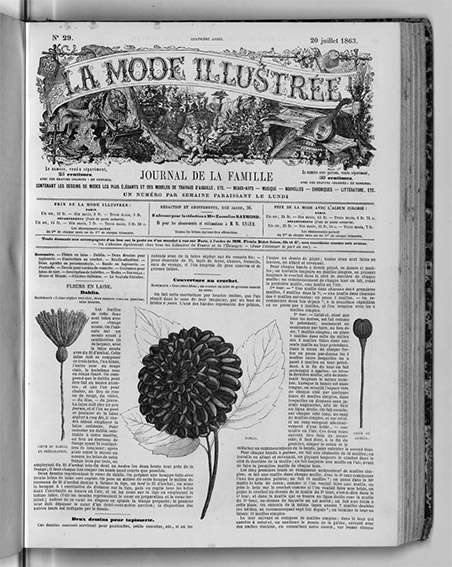
“Fleurs en laine” — A French Source, 1863
Most importantly, nineteenth-century French sources also document the technique directly.
On 20 July 1863, the Paris fashion and needlework periodical La Mode Illustrée published illustrated instructions entitled “Fleurs en laine — Dahlia.” The article explains how to construct a three-dimensional dahlia from wool.
It specifies laine zéphyr — Zephyr wool — together with very fine wire (fil d’archal très-fin). First, the maker forms the wool into a fringe. Next, fine wire secures individual groups of fibres. Finally, the maker arranges the prepared wool spirally around a separately constructed flower centre.
The accompanying engravings show both the completed dahlia and several stages in the construction of its centre.
This source is particularly relevant to the present corsage because it records the deliberate construction of artificial three-dimensional flowers from wool and fine wire in France as early as 1863.
Therefore, the technique fits firmly within the vocabulary of nineteenth-century French decorative work.
Source: La Mode Illustrée, No. 29, 20 July 1863, “Fleurs en laine — Dahlia.”
The final images in this listing are included as historical research references and do not depict the item offered for sale.
- Celestia Very Morey’s Woolwork Floral Wreath, c. 1870
Zephyr woollen yarn worked over a wrapped wire frame.
National Museum of American History, Smithsonian Institution.
Object TE.T14402.00A / nmah_643624. - Wool Wreath, 1864–1865
National Museum of American History, Smithsonian Institution.
Object DL.60.0254 / nmah_314014. - Woolwork, 1880–1890
National Museum of American History, Smithsonian Institution.
Object DL.68.0470 / nmah_314011. - “Fleurs en laine — Dahlia”
La Mode Illustrée, No. 29, 20 July 1863. Access to PDF here.
Contemporary French illustrated instructions for making a three-dimensional dahlia from wool and fine wire.
Additional information
| Flower Product | Bouquets |
|---|
You may also like…


Related products
-


Antique velvet rose applique. French floral card 1900s
22,00€ Add to cart -

Vintage millinery. 1900s. Celluloid grapes bunch. French Hat’s trim. Dress ornament. Handmade, original condition
21,00€ Add to cart -
Vintage millinery French rose. 1910s French Flower. Hat’s trim. True vintage flower
32,50€ Add to cart -

Vintage millinery roses. 1940s. French Hat’s trim. Dress ornament. Original condition. Vintage supplies
21,00€ Add to cart