Antique Silk Carnation Corsage, c. 1890–1910
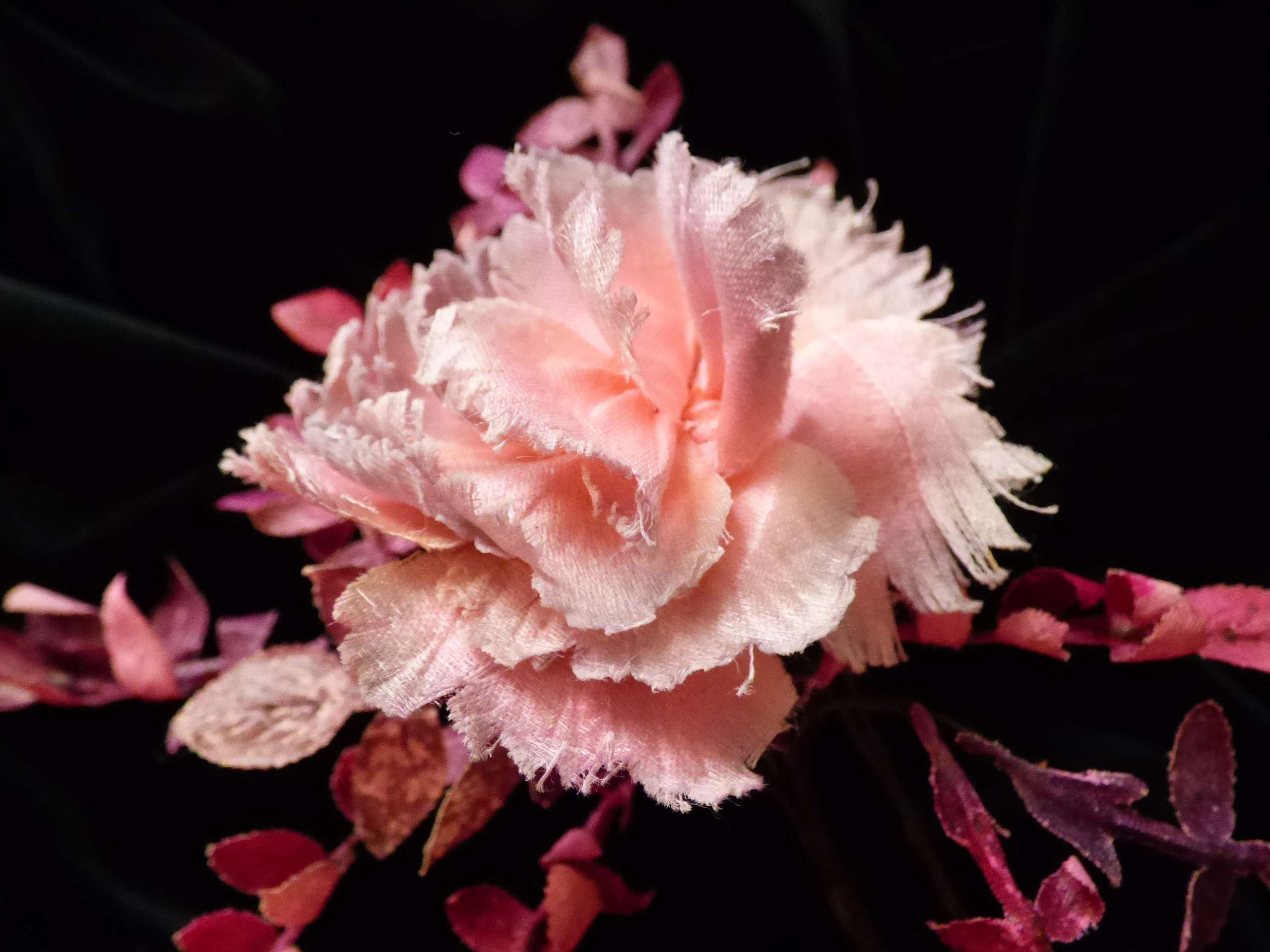
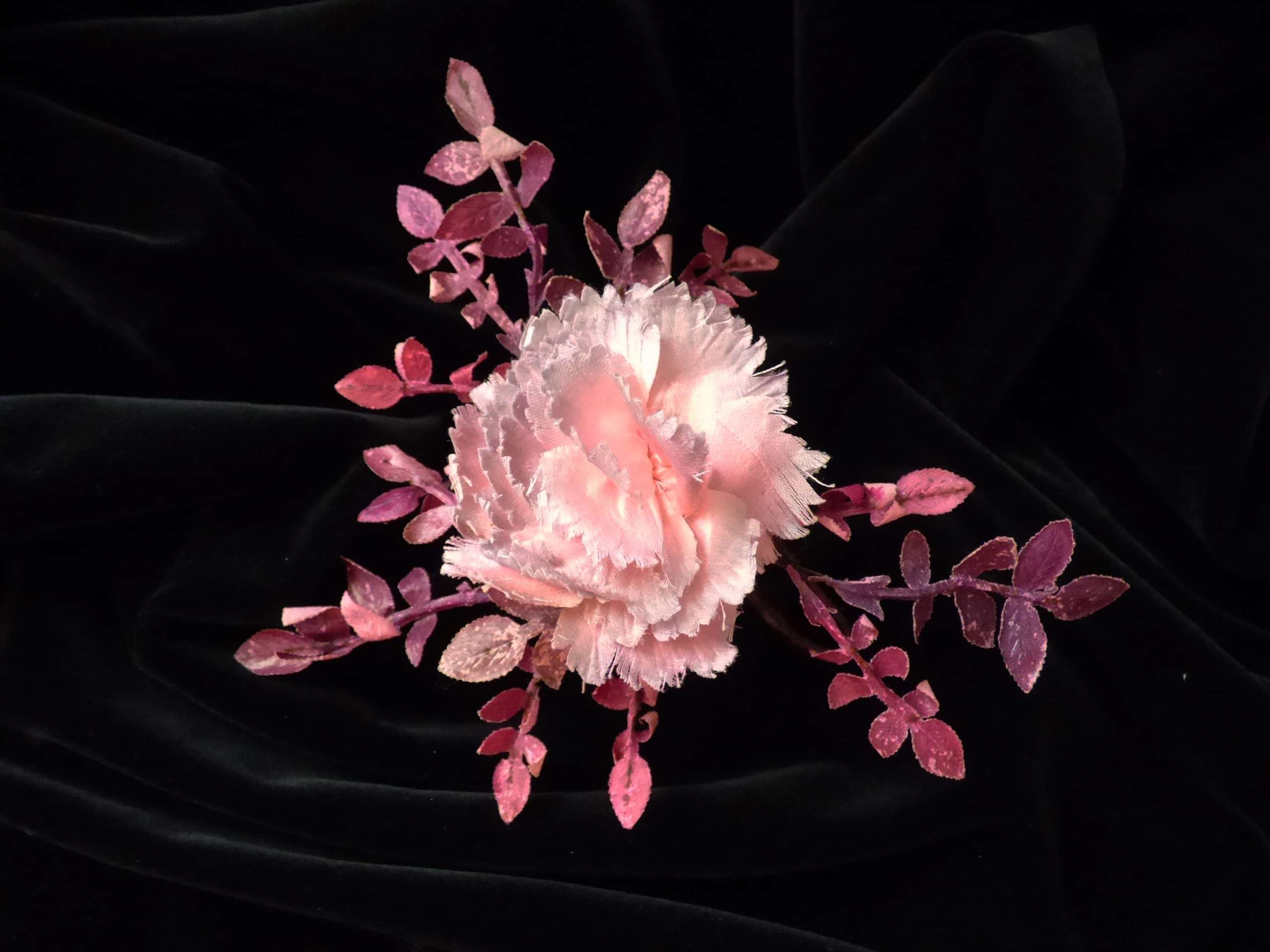
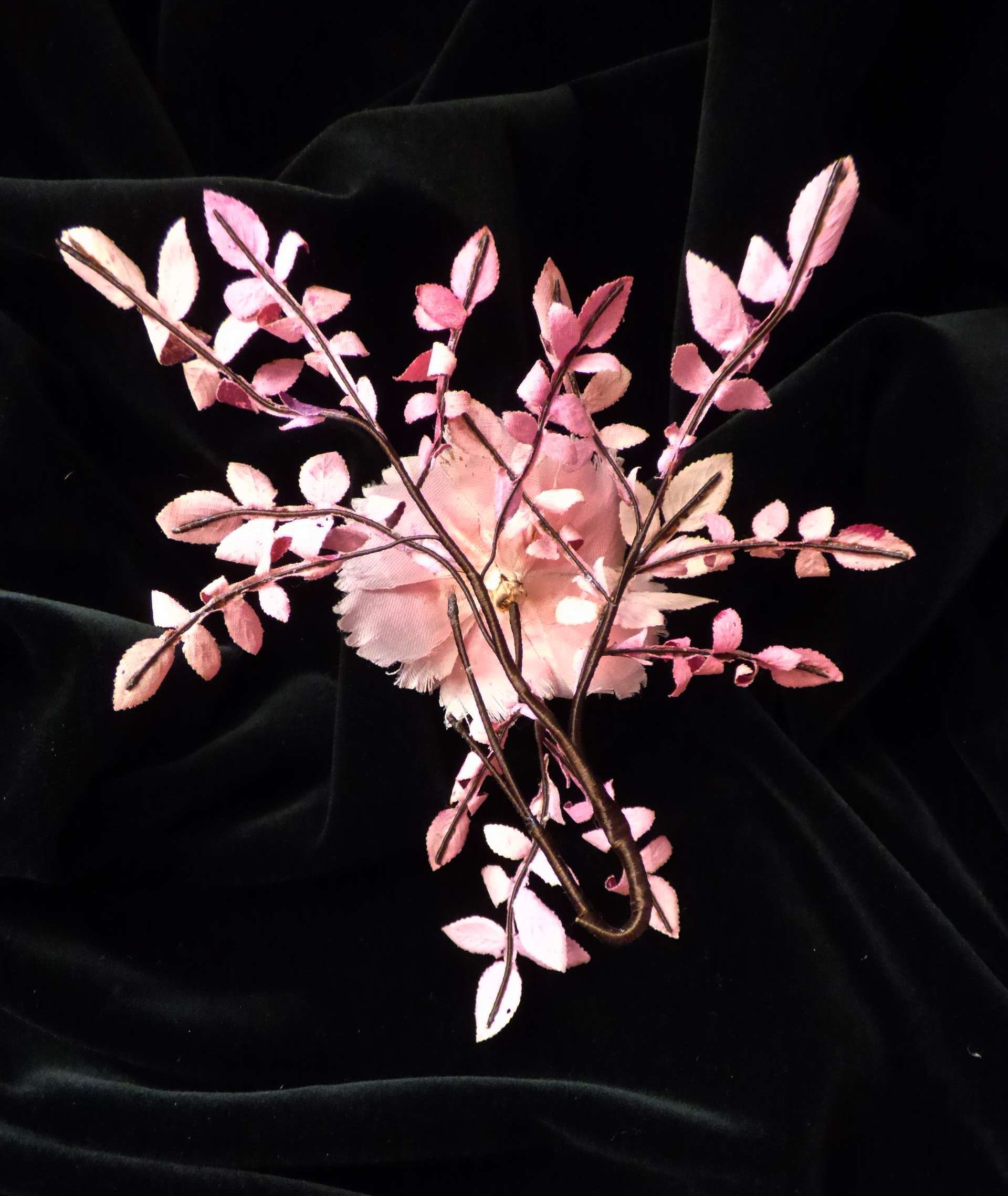
Antique silk carnation corsage dating from c. 1890–1910, featuring a large pale pink carnation made from layers of dyed silk satin and surrounded by painted cotton-taffeta foliage in shades of rose, wine and purple.
Acquired in France and possibly French in origin, this exceptionally decorative floral ornament was designed for use on fashionable dress or millinery. Its flexible wired branches can still be gently shaped to adapt the composition to a hat, garment or display.
Approx. 20 × 15 cm; carnation approx. 8.5 cm across.
Description
A beautifully preserved antique silk carnation corsage dating from around the turn of the 20th century, centred on a large and expressive pale pink carnation.
Date: c. 1890–1910
Origin: France
Dimensions: approx. 20 × 15 cm
Carnation diameter: approx. 8.5 cm
Materials: dyed silk satin, painted cotton taffeta, wrapped wire
Motif: carnation with stylised branching foliage
Probable use: dress or millinery ornament
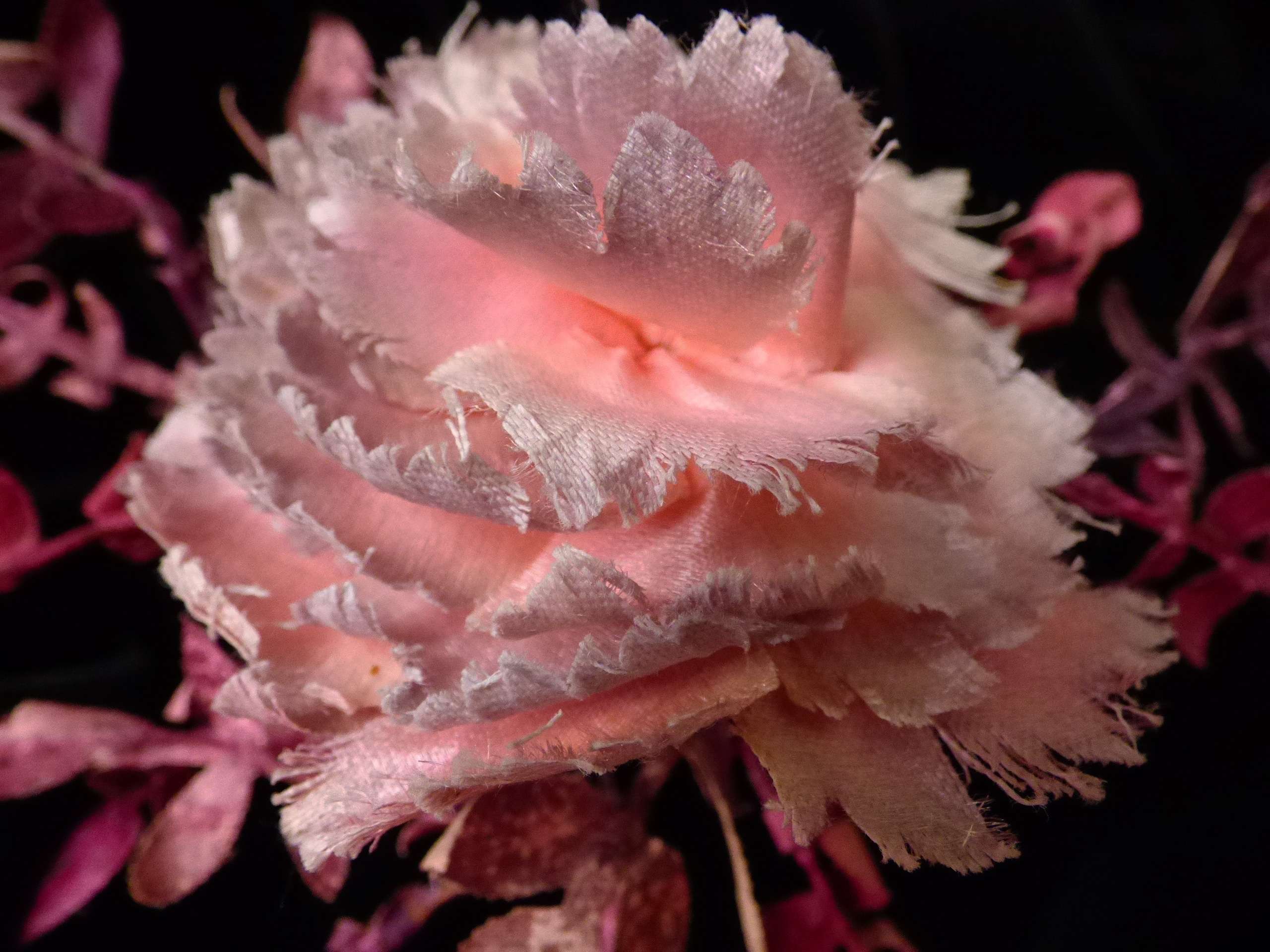
The carnation measures approximately 8.5 cm across. Numerous layers of dyed silk satin form its full, ruffled shape.
Each layer has irregular, finely fringed edges that imitate the texture of a natural carnation. Subtle variations in the pale blush-pink silk give the flower depth and luminosity.
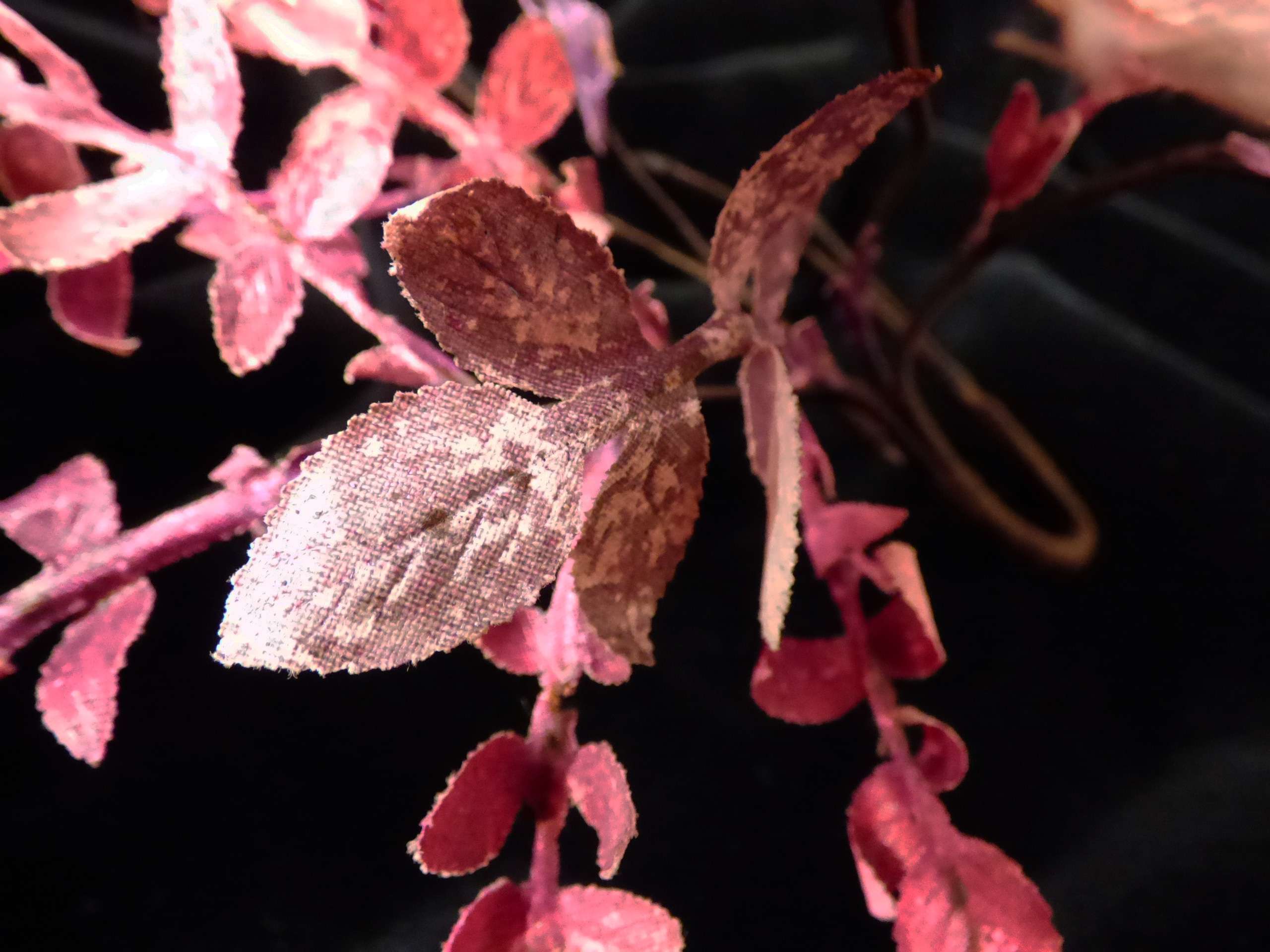
Slender branching stems surround the carnation. They carry dozens of small painted cotton-taffeta leaves in shades of dusty pink, rose, wine and purple.
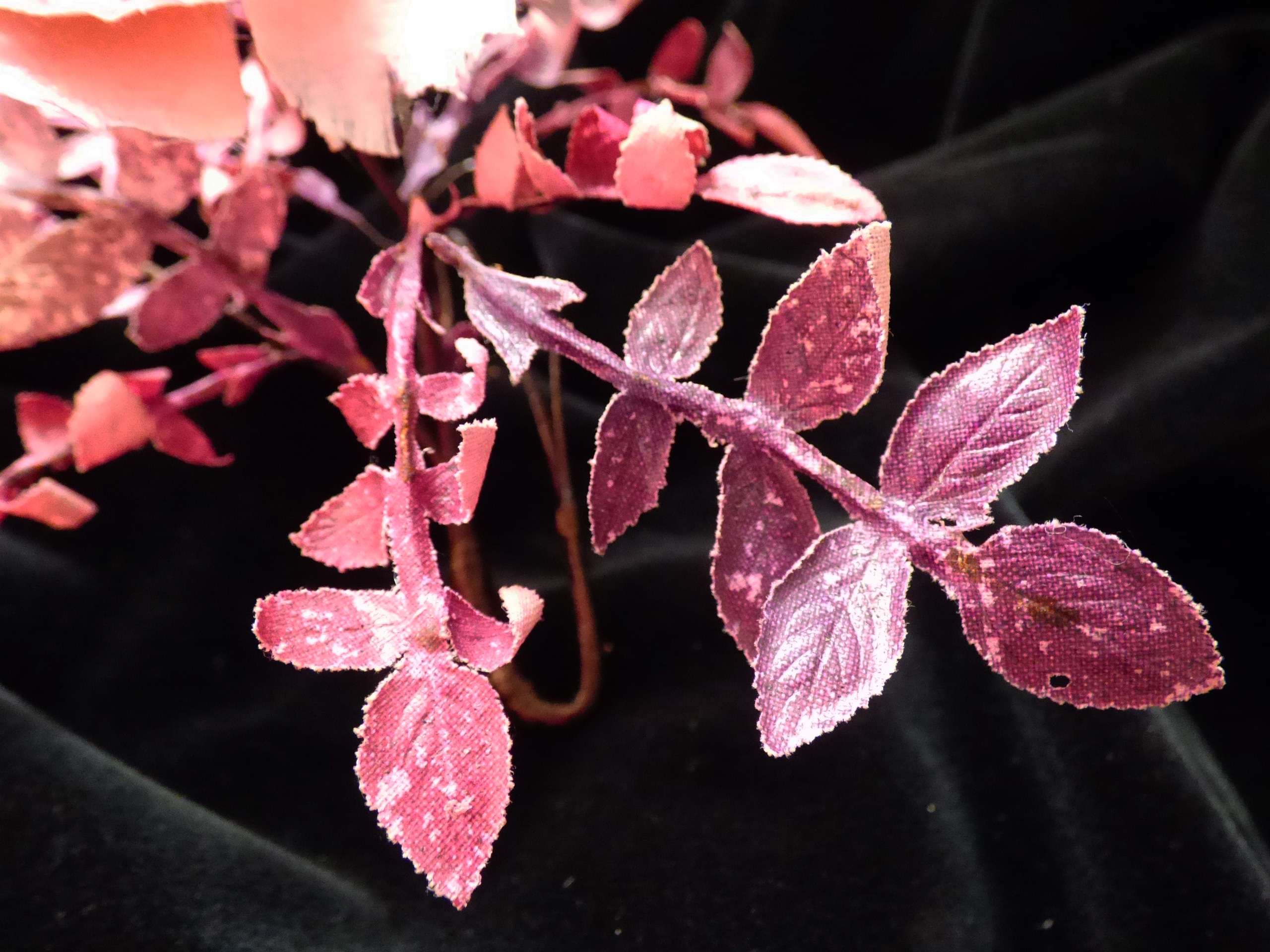
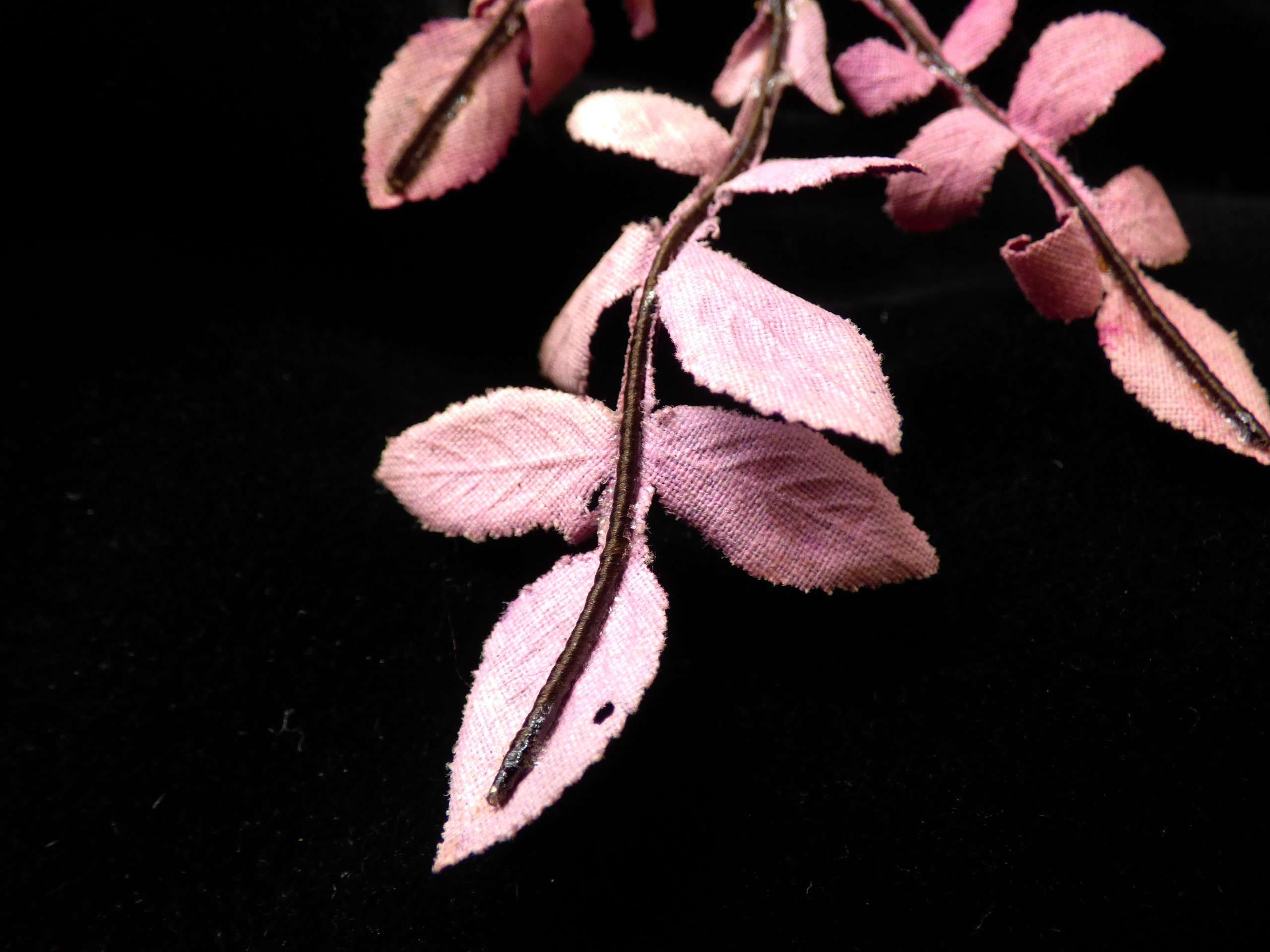
The leaves feature impressed veins and finely serrated edges. Their unusual colouring moves away from strict botanical realism and gives the corsage a more decorative character.
This contrast is one of the most distinctive aspects of the piece. The carnation has a naturalistic form, while the foliage introduces a more imaginative and stylised element.
Together, these details reflect the sophisticated artificial-flower tradition that flourished around 1900.
The flexible wire structure allows the ornament to adapt to different settings. The branches are currently arranged relatively straight, but they can be gently curved and repositioned.
This makes it possible to create a more natural silhouette or adapt the corsage to the shape of a hat or garment.
A Fin-de-Siècle Botanical Aesthetic
The corsage belongs to a period when botanical forms played an important role in fashion and decorative design.
Its slender branches and stylised foliage reflect the broader fin-de-siècle fascination with flowers, stems and leaves as decorative motifs.
This same interest also shaped Art Nouveau around 1900.
The corsage is not attributed to an Art Nouveau designer or workshop. However, its combination of natural observation and decorative stylisation places it within the wider visual culture of the period.
Botanical forms were constantly reinterpreted for fashion, interiors and the decorative arts.
The Carnation and the Language of Flowers
Around 1900, a carnation could carry meanings beyond its decorative beauty.
Nineteenth-century floriography — the popular “language of flowers” — gave symbolic meanings to individual flowers. Bouquets and floral images could therefore suggest emotions, sentiments or messages.
There was, however, no single universally accepted meaning for the carnation.
An American Language of Flowers series published in 1892 and represented in the collection of The Metropolitan Museum of Art associates the carnation with “Pride.”
Other Victorian flower dictionaries distinguished between colours and varieties.
Kate Greenaway’s Language of Flowers, for example, assigns different meanings to deep red, striped and yellow carnations. It also associates the closely related “Carnation Pink” with “Woman’s love.”
These historical meanings do not tell us why this particular flower was made, purchased or worn.
They do, however, offer a glimpse into the symbolic world that surrounded flowers when this ornament was created.
Condition & Conservation
The corsage survives in very good antique condition considering the delicacy of its materials and its age of approximately 120 years.
We have carefully cleaned the silk carnation and cotton foliage to remove accumulated surface dust.
The wrapped stems have also been restored and stabilised while preserving the original construction and character of the piece.
The silk petals retain their pale pink colouring and characteristic satin sheen.
Some petal edges show age-related wear, including fraying and small losses. The detailed photographs show these areas clearly.
The painted cotton leaves also show signs of age. These include fading, rubbing, pigment loss and occasional small holes.
We have not concealed these traces. They remain part of the material history of this exceptionally delicate textile ornament.
The wired branches remain flexible and can be gently curved to alter the silhouette or adapt the corsage for display or wear.
Because the textiles are old and delicate, any adjustment should be made slowly and carefully. Handle the wired stems rather than pulling directly on the leaves.
Please examine all photographs carefully, including the detailed close-ups, as they form an important part of the condition description.
Historical References
Research references: The Metropolitan Museum of Art, New York: Hat, Mme. Pauline, ca. 1911; and the 1892 Floral Beauties and Language of Flowers series.
For further context on historical floriography, see The Metropolitan Museum of Art’s essay on the language of flowers and Kate Greenaway’s Language of Flowers.
Museum objects and historical references are included for research and comparison only. No direct connection between these objects and the corsage offered here is implied.
Additional information
| Flower Product | Bouquets |
|---|
Related products
-


Vintage millinery berries. 1900s. French Hat’s trim. Dress ornament. Original condition.
35,00€ Add to cart -

Vintage white roses and mayblossoms boutonniere 1900s. Vintage French flowers
26,70€ Add to cart -

Vintage red velvet rose applique. French floral card 1920s
17,00€ Add to cart -

Flapper flower. 1920s French. Hat’s trim. True vintage flower
39,00€ Add to cart


